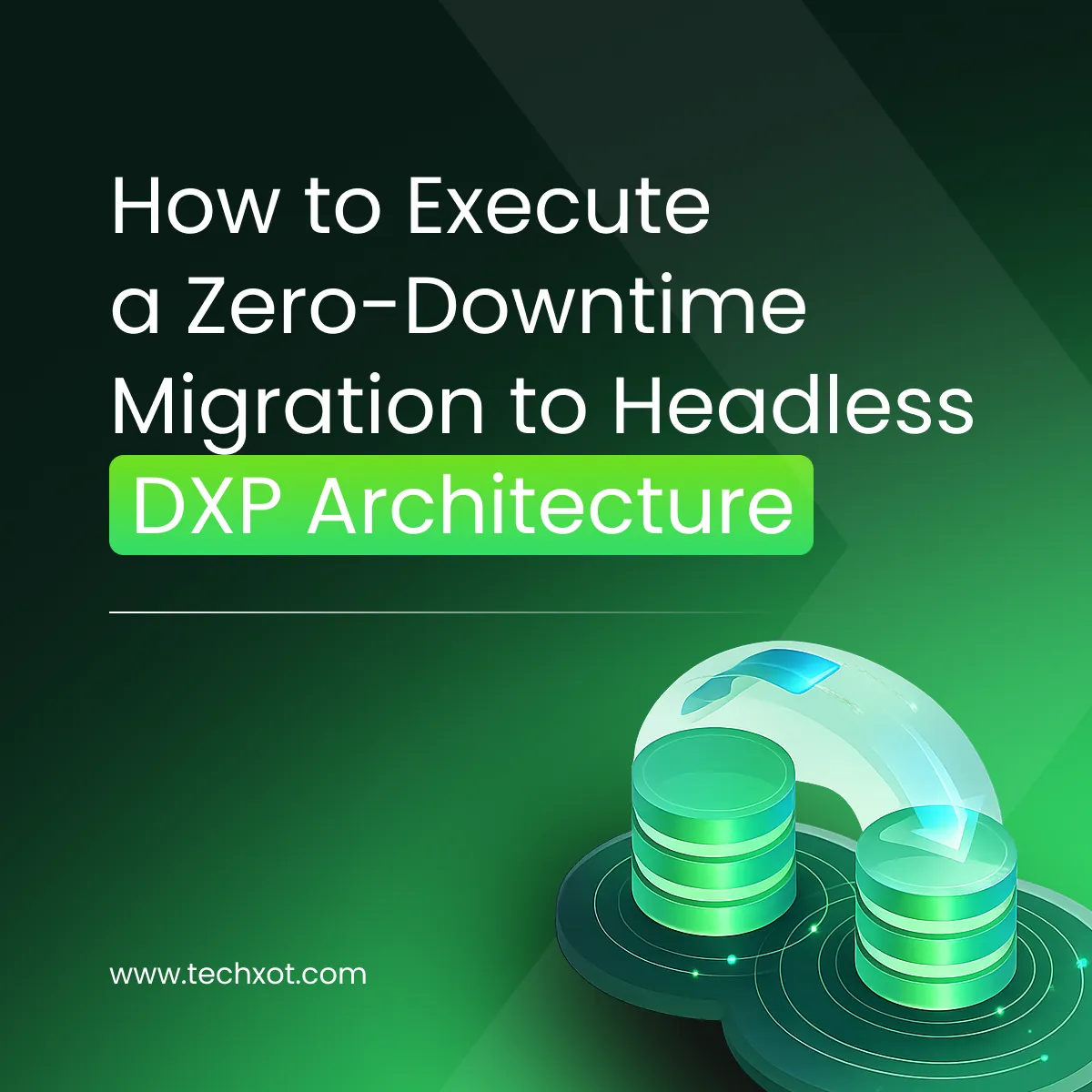

Introduction: Modernizing without disrupting customer experiences
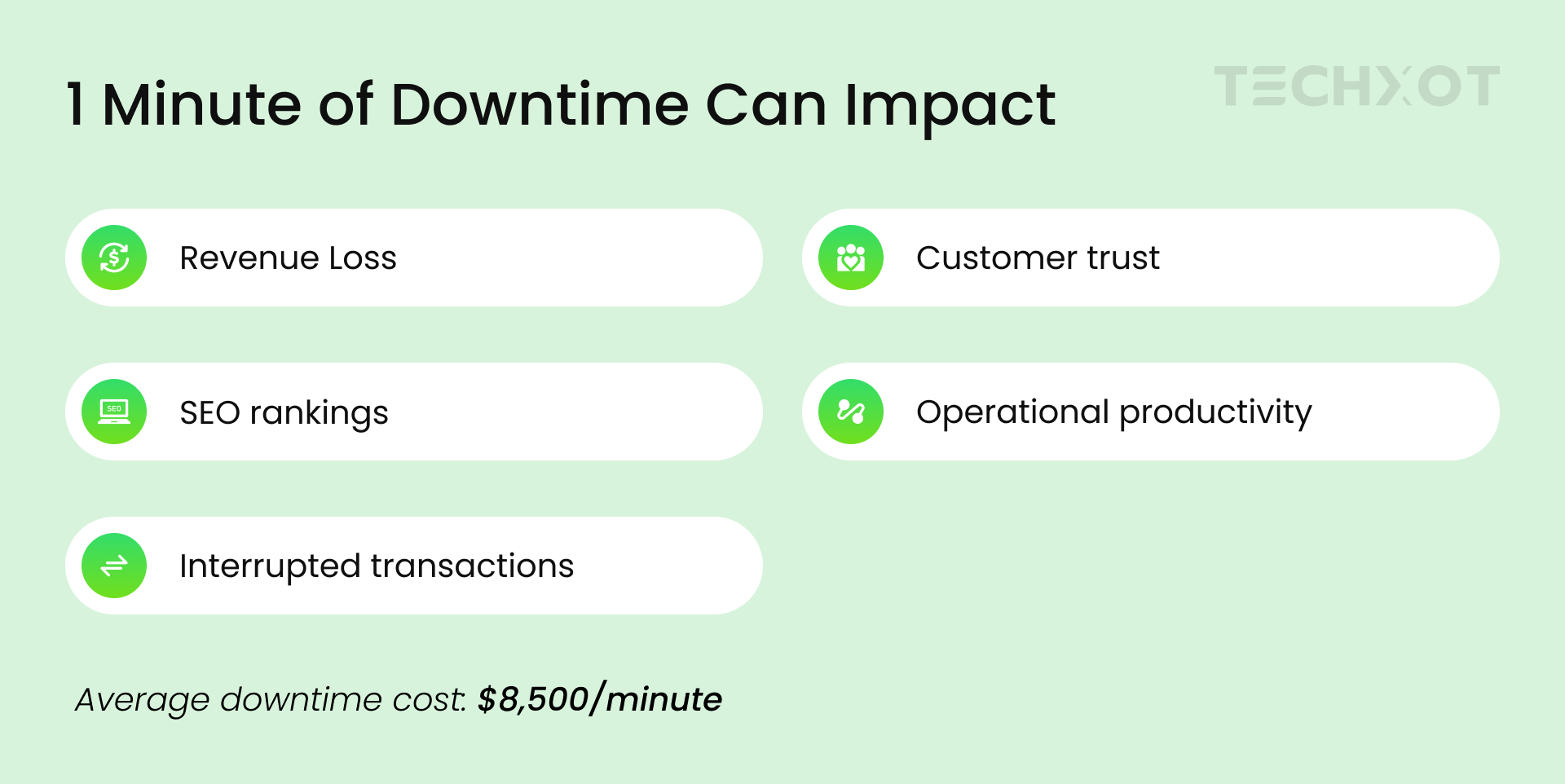
Digital transformations are no longer simply about adopting new platforms, rather it is about evolving systems and maintaining business continuity. A brief outage when enterprises are migrating from legacy CMS platforms, monolithic DXPs or any backend database will surely have an impact on revenue, customer trust, SEO visibility and operational efficiency of the business.
The latest cloud reliability data suggests, the average downtime cost across industries have reached roughly around $8000 per minute in 2025. These cases when enterprises are led by poor failover planning also experience downtime costs that are 2.5x times higher that expected.
This has introduced strategic priority on zero downtime migration for organizations modernizing their digital systems. A well-planned migration enables enterprise businesses to move apps, content, and databases to new infrastructure with at least one zero disruption for users or internal operations.
Why zero downtime migration matters in headless DXP modernization
The legacy digital experience platforms are coupled through architecture where frontend, backend logic and content management are interconnected. It becomes nearly impossible to drive migrations and upgrades when the platforms are functional.
But when an enterprise has headless DXP it solemnly removes any dependencies since it has a separate backend system from frontend delivery through APIs.
The headless architecture helps enterprises:
Deploy frontend changes independently
Migrate backend service incrementally
Scaling across multichannel
Decrease dependency on monolithic platforms
This has attracted too much attention, and organizations now are shifting to headless architectures. Research has shown 65% enterprises have adopted headless CMS architecture or more that 48% are evaluating current platforms for headless CMS upgrade readiness. It also proven that organizations that migrated to headless delivery have reported 3.2x faster average page load time.
Essential steps for database migration with zero downtime
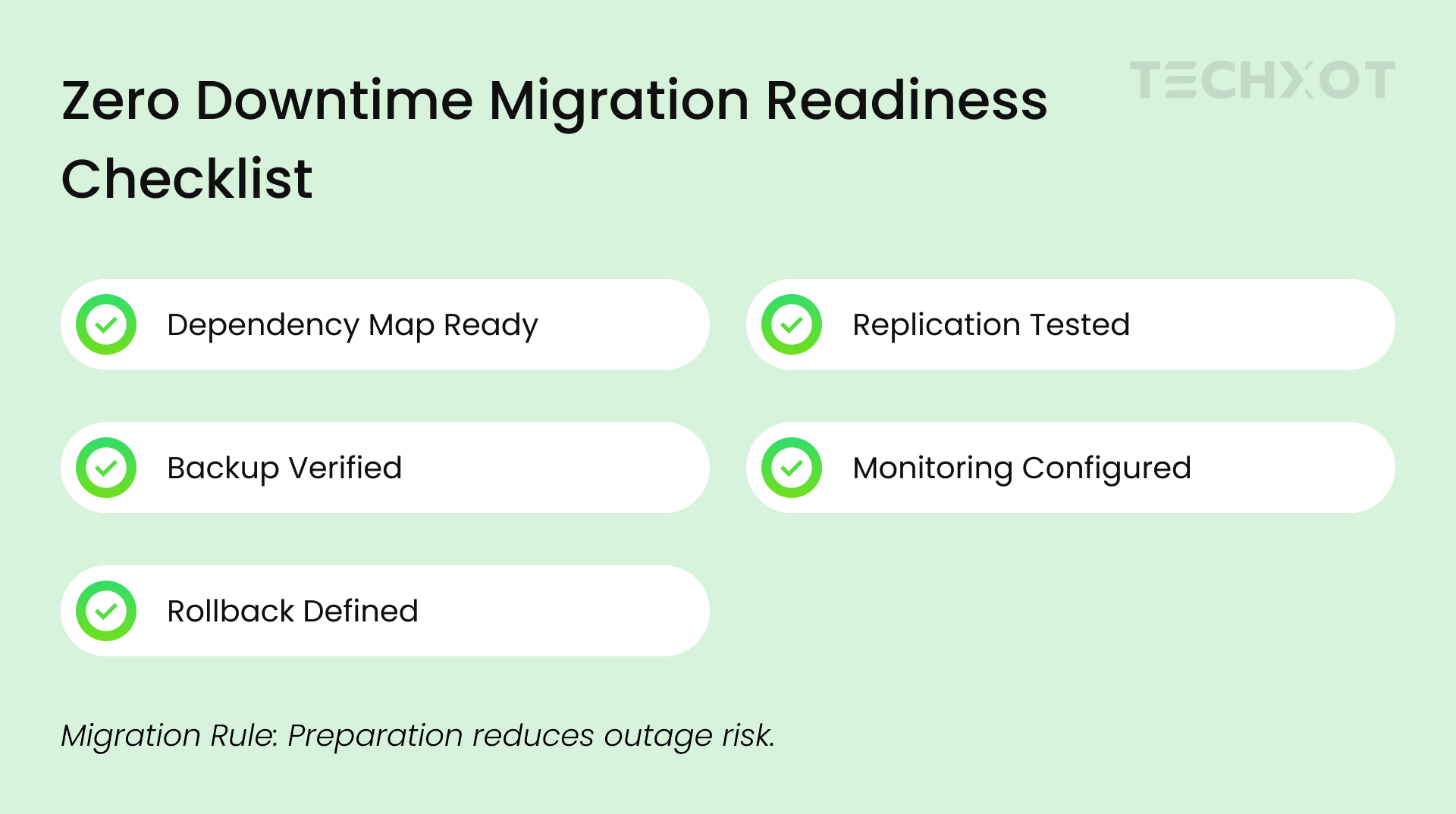
Zero downtime migration needs preparation, orchestration, and rollback readiness. It is for the enterprises planning migration to have a full visibility on architecture dependencies and operational risks before moving systems.
A well-planned migration strategy should begin with:
1. Infrastructure audit
A technical audit allows teams to identify peak migration blockers and acute business dependencies.
Teams need to assess:
Database schema
Integrations
APIs
Traffic behavior
Authentication layers
Content repositories
The audit deliverables should include dependency mapping, migration inventory, risk assessments, and rollback documentation.
2. Migration architecture planning
Phased migration reduces a significant amount of risk rather than a full cutover replacement.
Recommended architectures:
Legacy environment
Replication layer
Cloud or headless platforms
API abstraction layer
CDN and routing controls
This strategy allows enterprises to initiate gradual migration while maintaining live operations.
3. Backup and recovery preparation
It is a very crucial step in the migration process to create and validate recovery mechanisms before organizations start migrating production systems.
Enterprises must prepare:
Full backups
Point-in-time recovery
Restore validation
Migration without tested backups is an extremely expensive experiment.
4. Schema validation
Schema mismatches are common and most popular migration blockers.
So enterprise teams need to validate
Indexes
Triggers
Constraints
Stored procedure
Ensure the target platform supports all required logics before migration even begins.
5. Parallel environments
When teams run both environments simultaneously it reduces potential deployment risk and enables live testing.
Here are some of the benefits of parallel environments:
Production continuity
Load validation
Issue detection before cutover
6. Data integrity validation
Teams need to validate, verify and compare source and target systems before switching traffic.
Teams should validate:
Row counts
Checksums
Transaction logs
Sync freshness
This automated validation reduces hidden data inconsistencies.
7. Blue-green deployment
Blue-green deployment is a safe release method that helps in zero downtime migrations. Where blue is live production and green is new environments, once they are validated traffic is switched instantly.
Benefits of this deployment are:
Near zero downtime
Instant rollback
Safer release
Common risks that cause downtime during migration
Even a structured migration can fail without operational safeguards.
Common downtime risks are:
Replication lag
Schema mismatches
API dependency failures
DNS propagation delays
Incomplete rollback planning
While some of the migration strategies should include Phased rollouts, pre-launch testing, monitoring and backups validations. Thus the recent reliability benchmarks show that API downtime increases by 60% every year making monitoring and dependency management crucial.
async function retryRequest(fn, retries = 3) {
    for (let i = 0; i < retries; i++) {
        try {
            return await fn();
        } catch {}
    }
}
How to choose the right zero downtime migration partner
Even though technology selection matters the most, choosing an execution expert is even more important.
When choosing a migration partner looks for proven experience in:
Headless DXP modernization
Cloud migration
Rollback planning
Enterprise deployment
Ask the following questions while selecting the right execution partner:
Have you executed live migrations before?
What replication method do you recommend?
How do you validate data consistency?
What rollback procedure is included?
The right partner will always reduce operational risk while accelerating modernization.
How headless DXP supports zero downtime migration
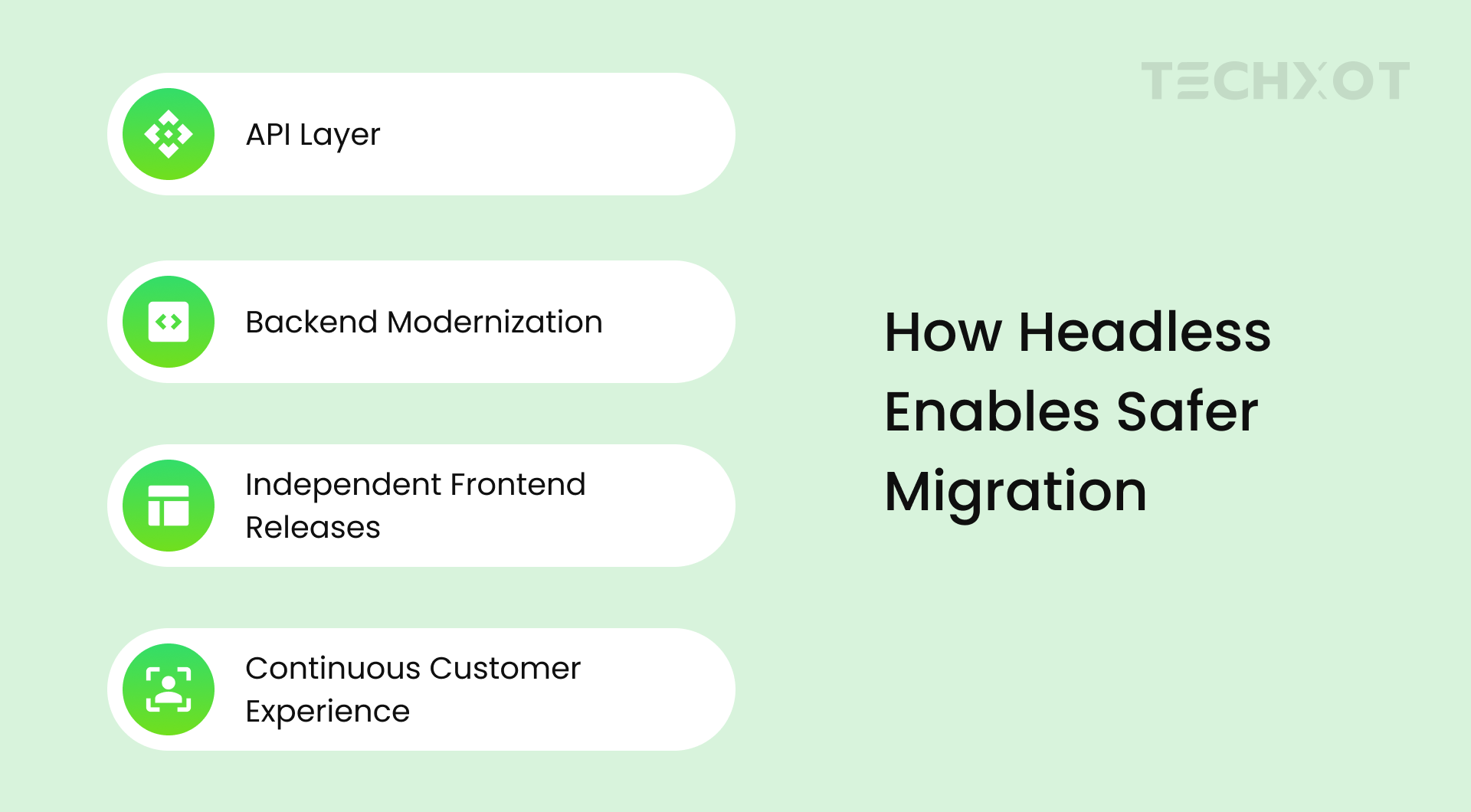
The headless platforms align with zero downtime strategies since they are modular, API-first, and deployment friendly .
The important benefits may include:
Decoupled frontend and backend
Phased modernization
Faster deployment cycles
Omnichannel scalability
This allows headless DXP to become a strong foundation for organizations who want a long-term digital transformation.
Conclusion
A successful zero downtime migration is not just about technology upgrade, it is a business continuity strategy.
It combines:
Real-time replication
Phased rollouts
Blue-green deployments
Monitoring
Rollback readiness
All these capabilities allow organizations to modernize databases and digital platforms without disrupting users and operations.
As organizations continue adopting headless and clod-native ecosystems, the zero downtime migration will separate successful migration and failed expensive lessons.
Techxot helps enterprise brands to execute zero downtime migrations, headless modernization and cloud transformation programs to build scalable and long-term growth.