
Umbraco 18 has just announced new improvements at Codegarden 2026. These enhancements have made content reuse convenient, improved developer workflows, and supported platform capabilities in AI. Many updates in the past focused on underlying architecture and help solve developer and editor challenges when in process of building enterprise websites and headless architectures applications.
The new Umbraco 18 update talks about Library Elements, Delivery API behavior, OpenAPI modernization, and AI-ready APIs. Even though the new updates sound over the top they don’t alter the efficiency of Umbraco implementation and editor experience.
This blog post talks about the new feature highlights that stand out in the new updates.
Understanding Content Picker Vs Element Picker
Reusable Content Before Native Block Editor Support
AI Features for Editors and Developers
AI Content Assistance with Umbraco AI Agents
Understanding AI-driven Performance Using Cloud Insights
Working with Umbraco Developer MCP Server
Workflow Automation with Umbraco Automate
OpenAPI Gets a Modern Upgrade
Understanding Content Picker Vs Element Picker
It’s important to understand that Content Picker and Element Picker both are used to refer to content. Understanding the difference may help developers to choose the correct property editor, because they both behave differently in Delivery API. The choice of the property editor affects the performance and frontend development.
Feature | Content Picker | Element Picker |
|---|---|---|
Purpose | Links to routable content pages | References reusable Library Elements |
Routing Metadata | Returns route, name, ID, and created/updated dates | No routing metadata (elements are non-routable) |
Properties Object | Empty by default; requires property expansion or another API request | Fully populated in the initial response |
Additional API Calls | Usually required to retrieve content | Not required |
Best Used For | Navigation and linking to pages | Rendering reusable content like banners, CTAs, FAQs, and testimonials |
Performance | May require multiple requests | Single response with complete content |
How To Better Reuse Content with Library Elements
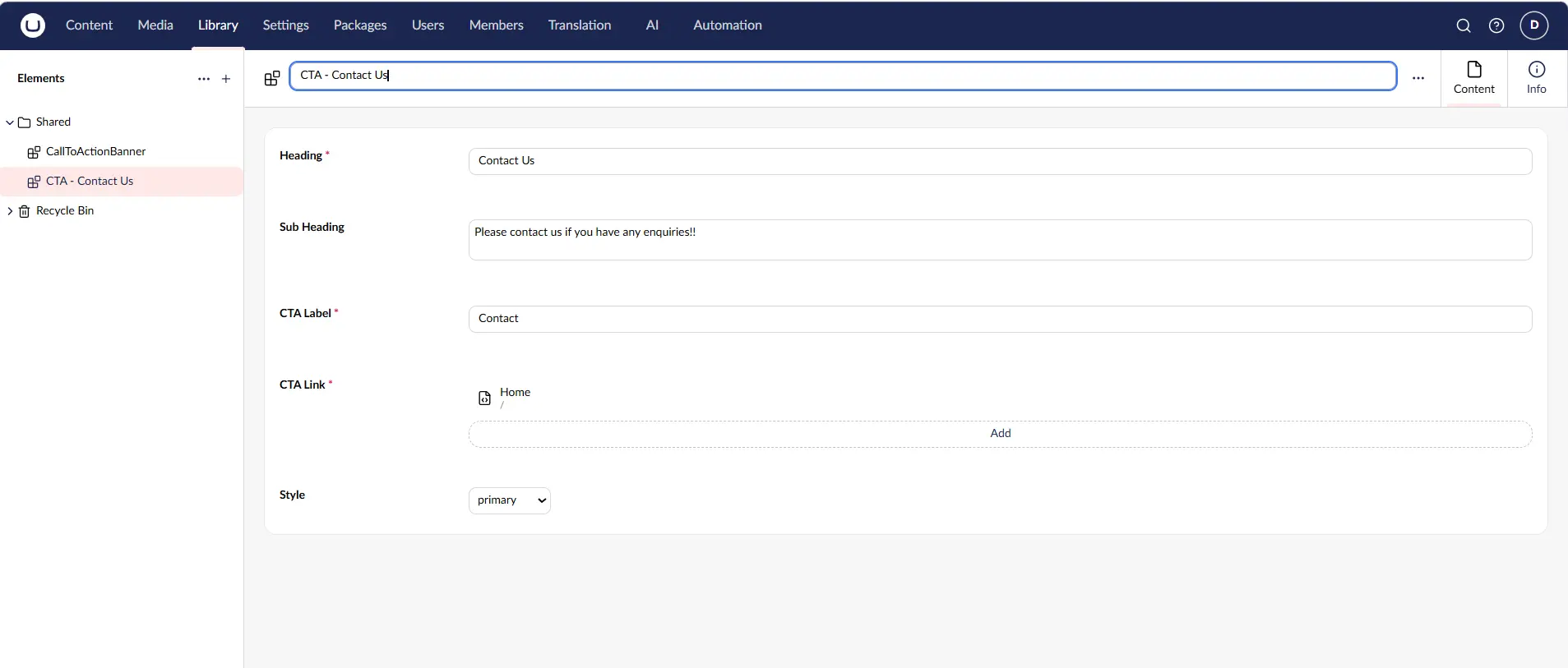
The new Library section in Umbraco has significantly grabbed attention since it allows reusing content that can be managed at one place and used across multiple pages.
Why Do Library Elements Matter?
They reuse content across multiple platform pages
Keep message consistent
Decrease duplicate content
Centralize reusable content components
This feature allows enterprises to create standard layouts without limiting content flexibility, since one element type can have multiple library instances, which contain different content but same structure.
Same Rendering Pattern for Multiple Scenarios
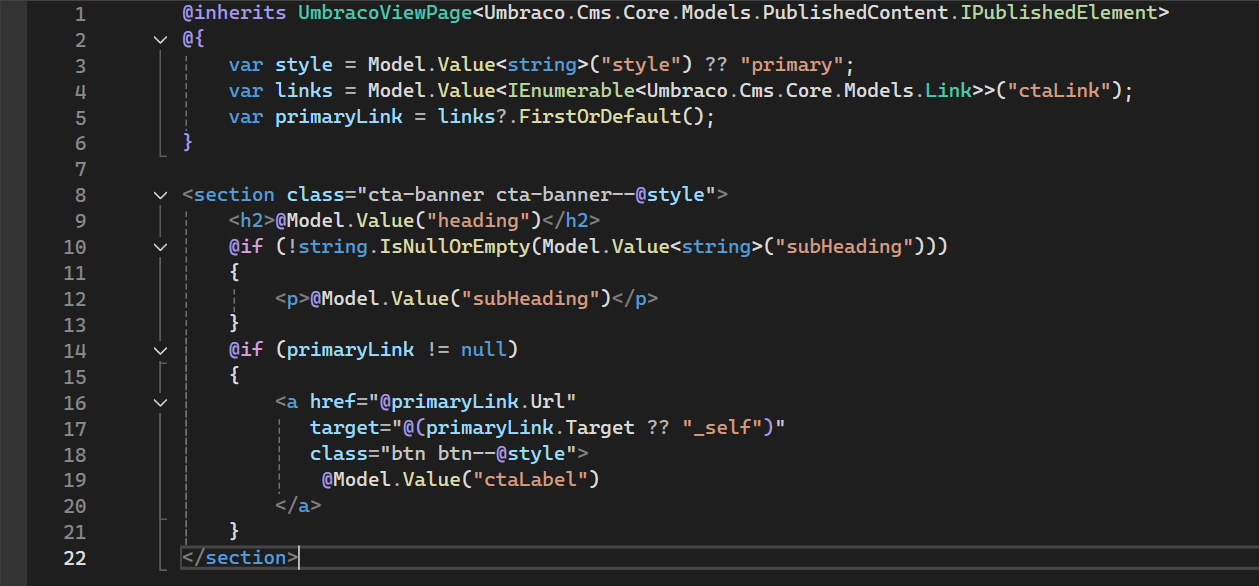
The Library Elements make the frontend rendering easy. The developers can create single rendering logic for different scenarios based on the elements contentType. This can lead to:
Lesser duplication of code
Maintenance is easy
Fast frontend development
Consistent rendering across application
Reusable Content Before Native Block Editor Support
The native block grid and block list integrations are planned forward for Umbraco 19. Till then the bridge pattern of Implementation approach can be used to create lightweight Block to contain an Element Picker. This enables developers to insert Library Elements inside the Block list while the reusable content is managed centrally.
Benefits
Keep current editor workflows unchanged
Native support decreased future migration efforts
Reuse Library Elements in the Block list today
Maintain scalable content structures
If your enterprise teams have adopted to Umbraco 18, the bridge pattern is an excellent opportunity until Native Block Editor integration is available.
AI Features for Editors and Developers
The Umbraco.AI is a modular layer in the Umbraco ecosystem that supports multiple AI providers and doesn’t lock enterprises to single AI vendor. It supports OpenAI, Anthropic, Google Gemini, Azure AI Boundary, and Amazon Bedrock.
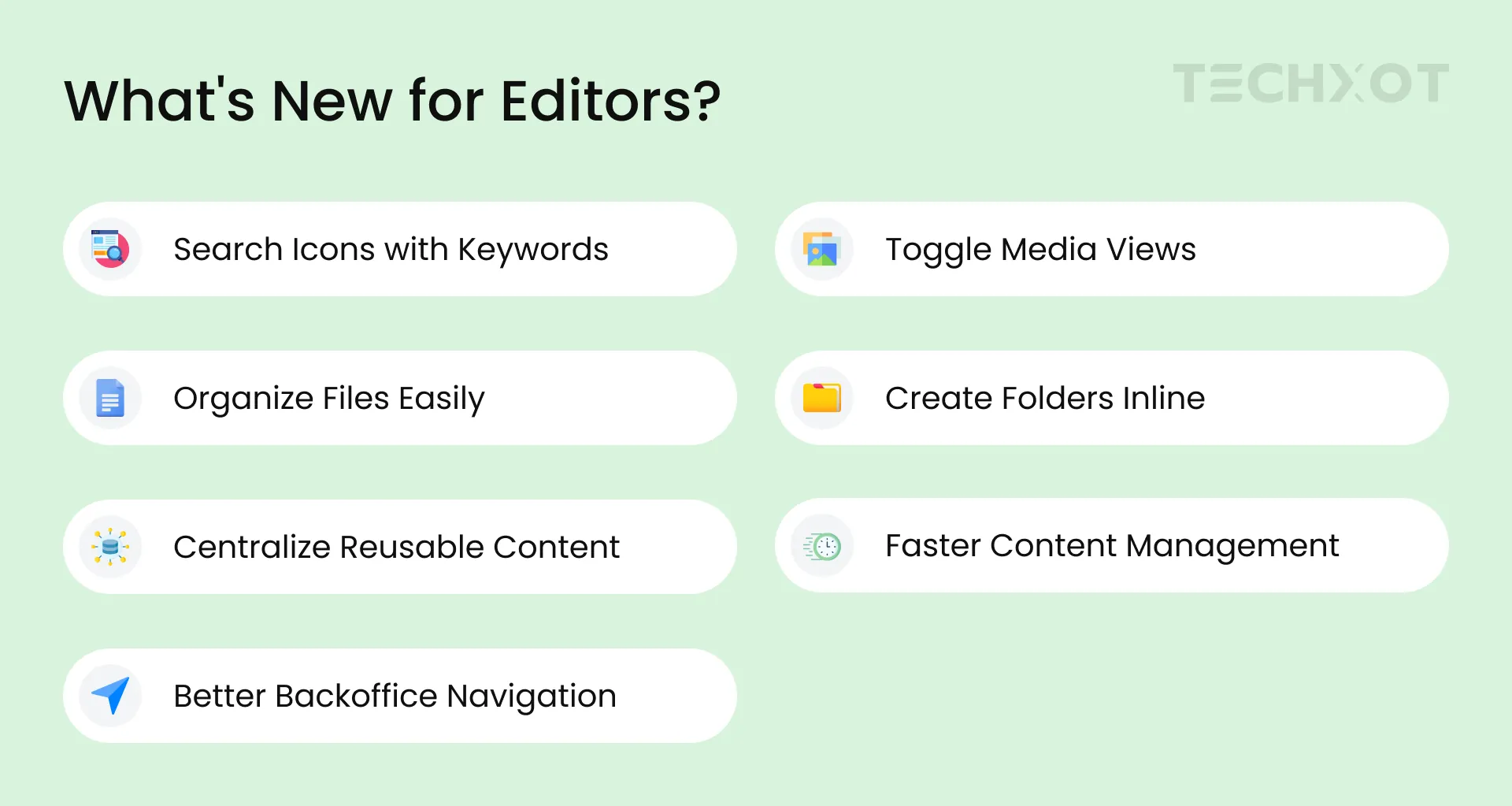
Editorial capabilities of AI are:
Generation meta description
Create image alt text
Create summaries
Translate and rewrite content
Improve access
Interact with Copilot for assistance
The Editor MCP allows teams to simplify drafting, metadata generation, and SEO tasks directly.
AI-ready Deployment
Umbraco 18 well supports JSON Schema endpoints and Document PATCH APIs. This allows to reduce guesswork and improve content value since they allows AI tools to understand Document Types and Data Types before updating or generating content. Umbraco supports heavy governance in AI adoption since AI capabilities are opt-in, enterprises are free to choose their AI vendor, and editor still remains in full control before publishing.
AI Content Assistance with Umbraco AI Agents
Umbraco 18 has taken a bold step in expanding the Umbraco AI capabilities using AI agents. These AI agents allow intelligent assistance for content creation, management, and publishing. The AI agents give intelligent content recommendations, build Model Context Protocol (MCP), automate workflows, and build context aware content suggestions.
These AI agents are the extended and evolved parts of Umbraco’s AI capabilities that will keep on evolving with future releases.
Prompt Example:
Rewrite this article for an enterprise audience.
Optimize it for SEO.
Generate a 155-character meta description.
Suggest a compelling CTA.
Understanding AI-driven Performance Using Cloud Insights
Umbraco Cloud now has Cloud Insights. These insights showcase better and smarter visibility in website performance. Cloud Insights monitor application performance, identify usage trends, give deployment analytics, track platform performance, and future optimization opportunities. The Cloud Insights allow marketing teams to take better performance decisions to deliver exceptional digital experiences to the users.
Here is a simple code to explain how Cloud Insights provides insights to the teams. And how they optimize user experience, monitor their Umbraco applications, and identify potential bottlenecks.
Example:
{
  "page": "/products",
  "visitors": 15234,
  "avgLoadTime": "1.8s",
  "bounceRate": "31%",
  "recommendation": "Optimize hero image."
}
Benefits of Cloud Insights are:
Improved operational visibility
Enhanced issue detection
Better website performance
Data-driven optimization decisions
Workflow Automation with Umbraco Automate (Beta)
Umbraco 18 has just released a new feature Umbraco Automate, a workflow automation engine, which helps enterprise teams to streamline repetitive tasks and business processes. Umbraco automate benefits teams in significantly reducing manual tasks, enhancing operational efficiency, accelerating content publishing and simplifying enterprise workflows, and automate it.
Key capabilities:
Improve workflows with custom integrations
Automate several content operations and publishing
Deeply integrate with Umbraco Deploy
Create unlimited workflows, actions, users and triggers
Example workflow:
trigger: Content Published
actions:
Notify Marketing Team
Log message
Notify Editor 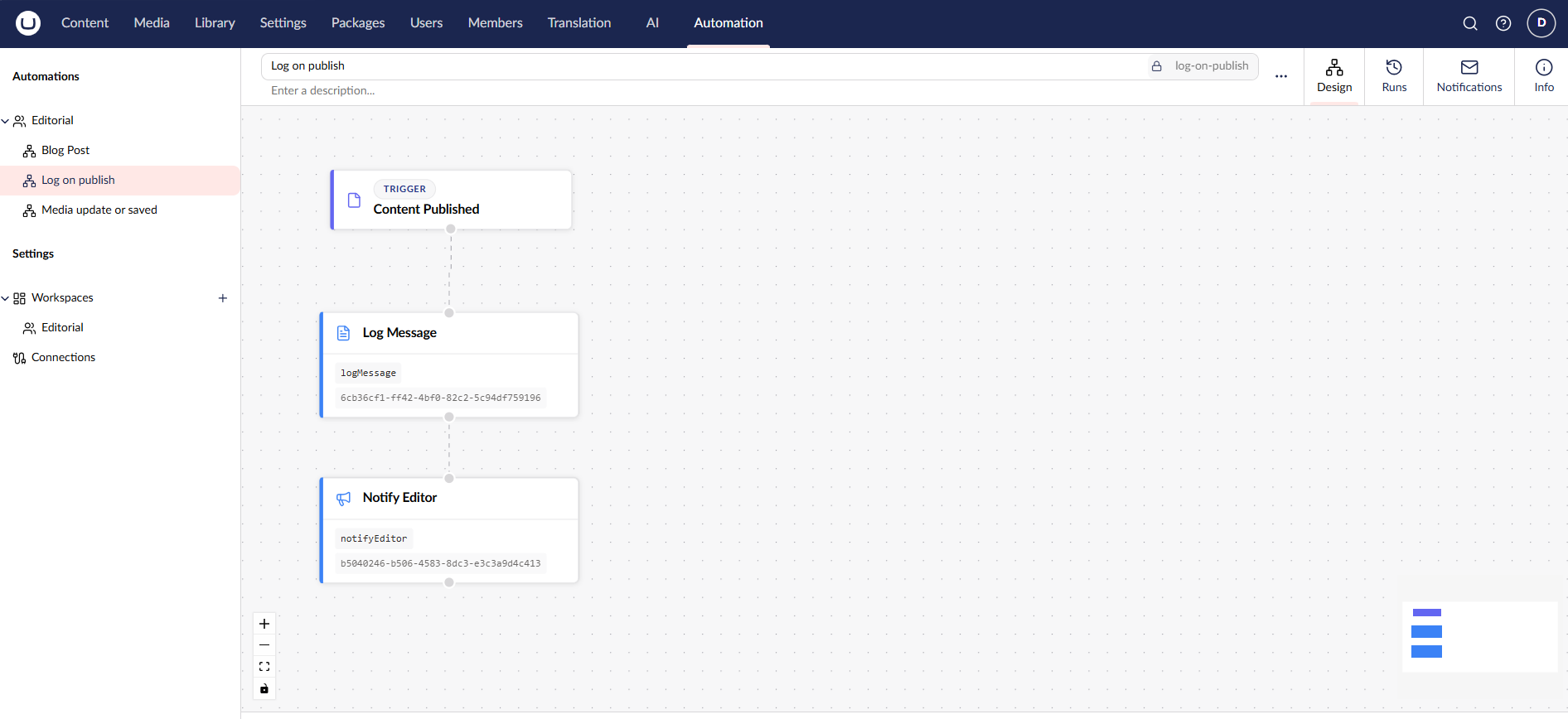
Umbraco Developer MCP Server
Umbraco Developer MCP (Model Context Protocol) is a new capability of Umbraco 18. It allows API assistant to interact with Umbraco Management API as structured set of tools. This enables natural language requests to perform operation at back-office.
Key capabilities include:
Create, update, publish, unpublish, move and delete content.
Build and manage composition, document types, and elements types.
Configuring Data Types with JSON Schema support
Check references of content, media and data types before making changes.
When Management API is combined with MCP, it enables teams to automate repetitive tasks and also accelerate content modeling with AI-assisted workflows.
OpenAPI Gets A Modern Upgrade
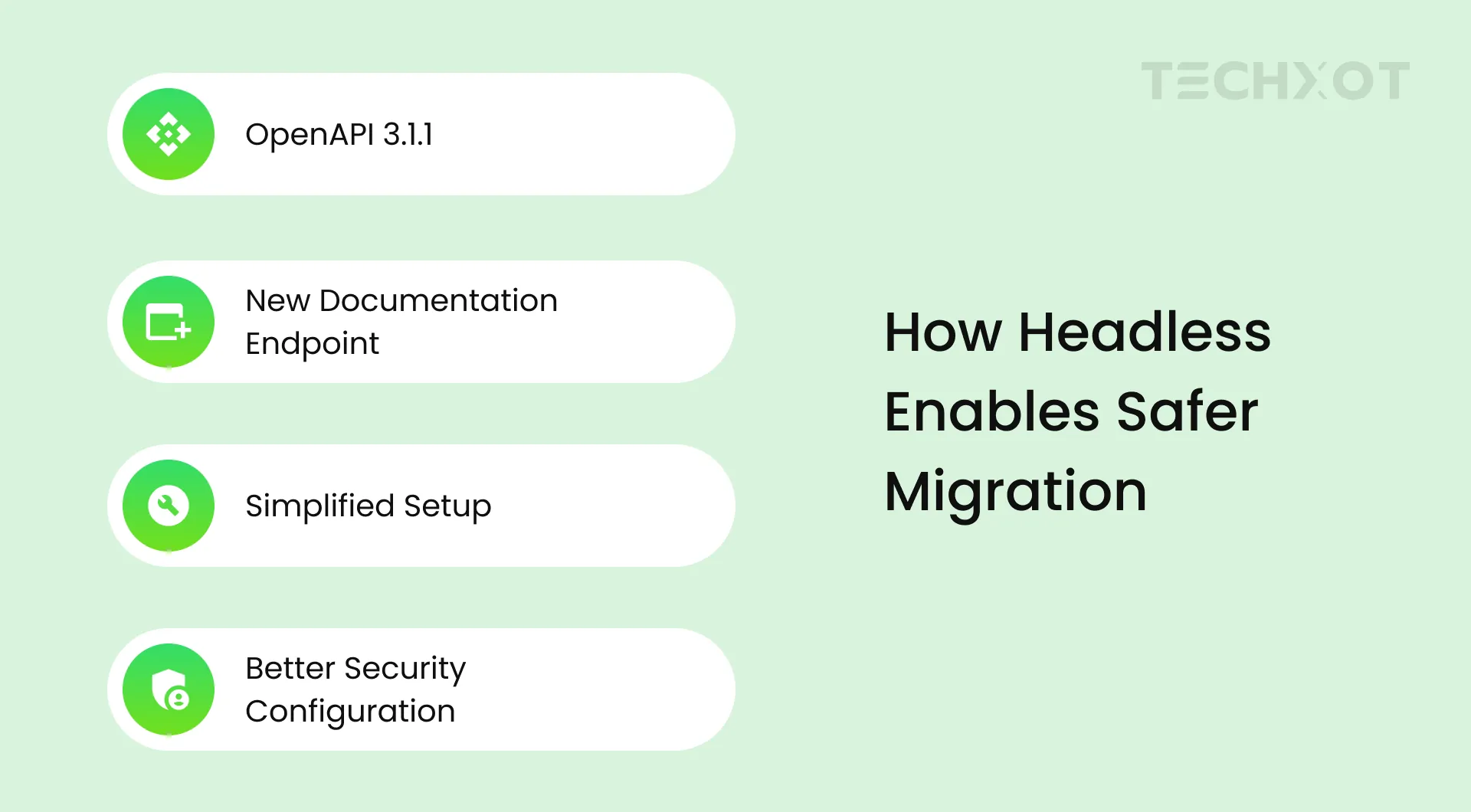
Umbraco 18 has replaced Swashbuckle’s OpenAPI document generation with Microsoft’s native Microsoft.ApsNetCore.OpenApi implementation. Though the API endpoints remained unchanged, the documentation pipeline has changed.
Why It Matters to Developer
These changes enable more standardized OpenAI implementation, with improvement in SDK generation and integration with .NET application. The current APIs continue to work, while making upgrades offer improved developer experience.
Lastest API updates developers should know
With Umbraco 18 feature updates, there are significant changes and updates in API and infrastructure that developers should know.
UmbracoApiController is removed. The custom API should use [ApiController] and [Route] attributes.
ILocalizationService is split into ILanguageService and IDictionaryItemService.
IFileService is divided into four focused services
Published content.Parent and Children are available through extension.
APIs follow async-first approach
Published snapshot and IPushlishedSnapshotAccessor is removed
Why Choose Techxot for Your Umbraco Implementation?
Umbraco 18 is not just about upgrading to the latest version. Rather it is all about implementing architectures that scale, content models that are reusable, and benefiting from Umbracos’s new APIs and AI capabilities.
At Techxot, we help enterprises who want to implement new platform or upgrade the current platform to build intelligent Umbraco solutions that are scalable, maintainable and closely aligned to your business goals.
Our expertise includes:
Umbraco implementation and upgrade
AI-focused Umbraco solutions
Headless CMS and composable architectures
Custom integrations and API development
Ongoing maintenance, support and optimization
Conclusion
Umbraco 18 is all about the improvements for developers and content editors. The reusable Library Elements are simplifying content management, headless performance is improved by smart Delivery API, modern Open API improved developer experience, and AI capabilities improved editor efficiency. All these platform enhancements are making Umbraco a more reliable and future-ready digital experience ecosystem than ever.
If you are planning to upgrade or implement new Umbraco systems, partnering with Techxot will ensure full advantage of these innovations and maximize Umbraco investments for your enterprise business.