
1. Introduction
Search has gone beyond traditional blue links. AI content discovery now uses AI assistants and generative search experience that potentially understand search intent, questions, summarize search query data, compare solutions and recommend sources.
The biggest question for Umbraco enterprises is:
“Is your Umbraco website structured so AI systems can understand, trust, retrieve, and use the content?”
AI search optimization for Umbraco combines Search Engine Optimization (SEO), Answer Engine Optimization (AEO), Generative Engine Optimization (GEO), schema makeup, APIs, security, structured content and governance.
The primary goal isn’t to create and optimize Umbraco platforms just for AI capabilities. Rather, the platforms must deliver digital experiences that are clear to users, understandable for machines, and ready for AI search discovery.
With over 30+ Umbraco implementation projects completed, Techxot, demonstrates hands-on expertise in building Umbraco experiences that are reliable, secure and AI-ready.
2. What Is AI Search Optimization for Umbraco?
The Umbraco websites should be optimized for content. This makes content easier to interpret and use by search engines, LLMs, AI assistants, and AI agents.
For an Umbraco website AI search optimization means:
Having structured and reusable content.
Authoritative data supported by evidence.
Machine-readable data.
Content delivery that is secured.
Defined relation between related data.
Content ownership and governance.
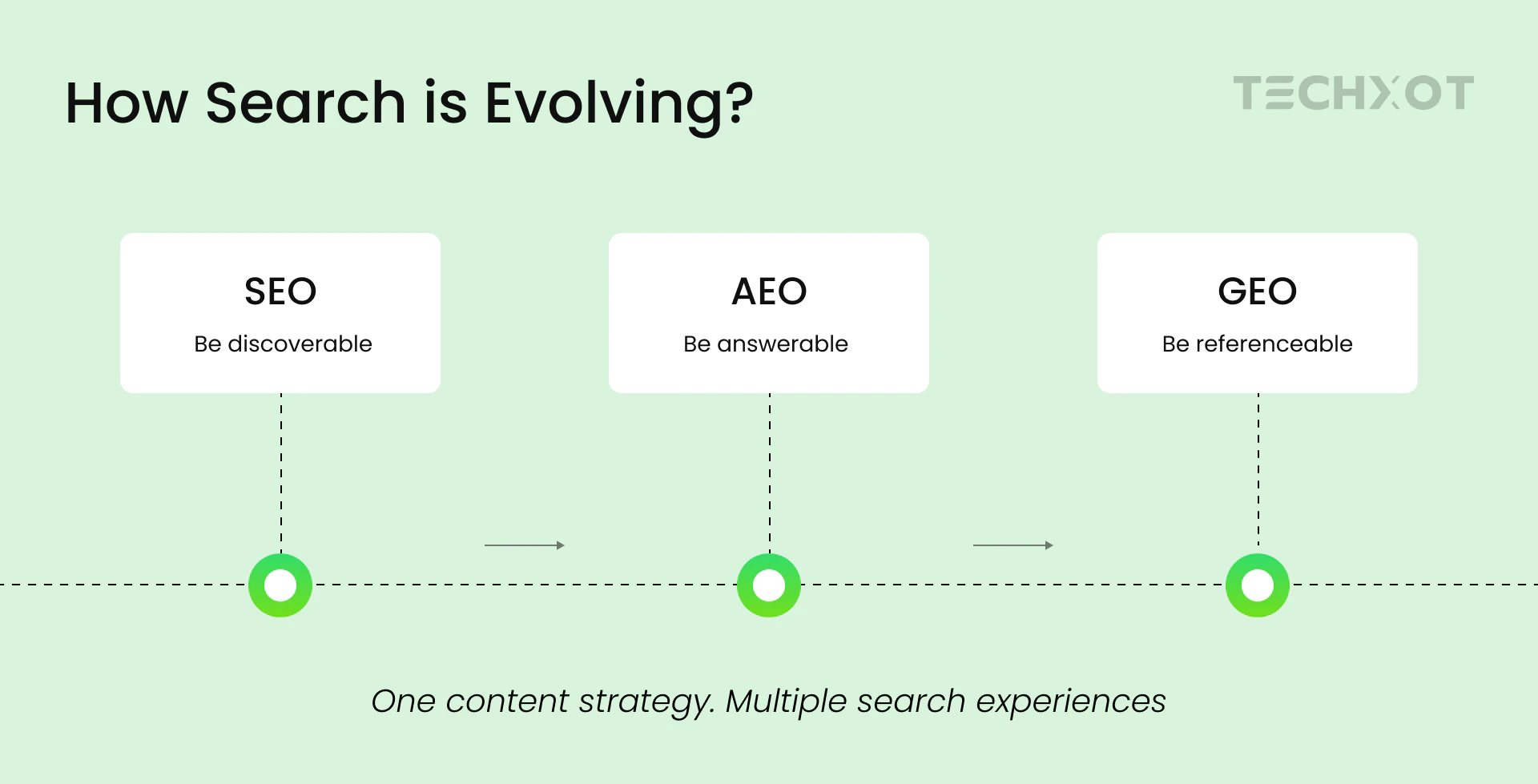
SEO stands strong as foundation, while AEO answers questions directly, and GEO supports visibility through AI-generated answers.
AEO Doesn’t Replace SEO, It Builds on It.
AEO requires content in the form of direct answer to be created around user intent and not just keywords.
How do I migrate from Umbraco 17 to newer versions?
What to Check Before Starting Umbraco Development?
What are common migration risks?
How to prepare your Umbraco platform for integration?
Content as direct answers to these questions work across traditional search to AI-driven discovery.
3. How To Build Structured and Entity-first Content?
An enterprise Umbraco website can contain pages with content about products, services, industries, resources, and case studies in thousands. AI models and LLMs require content to be understood by them and be related together.
For example:
An Umbraco migration guide can be internally connected to:
Migration prerequisites
FAQs
Related case studies
Version-specific documentation
Technical guides
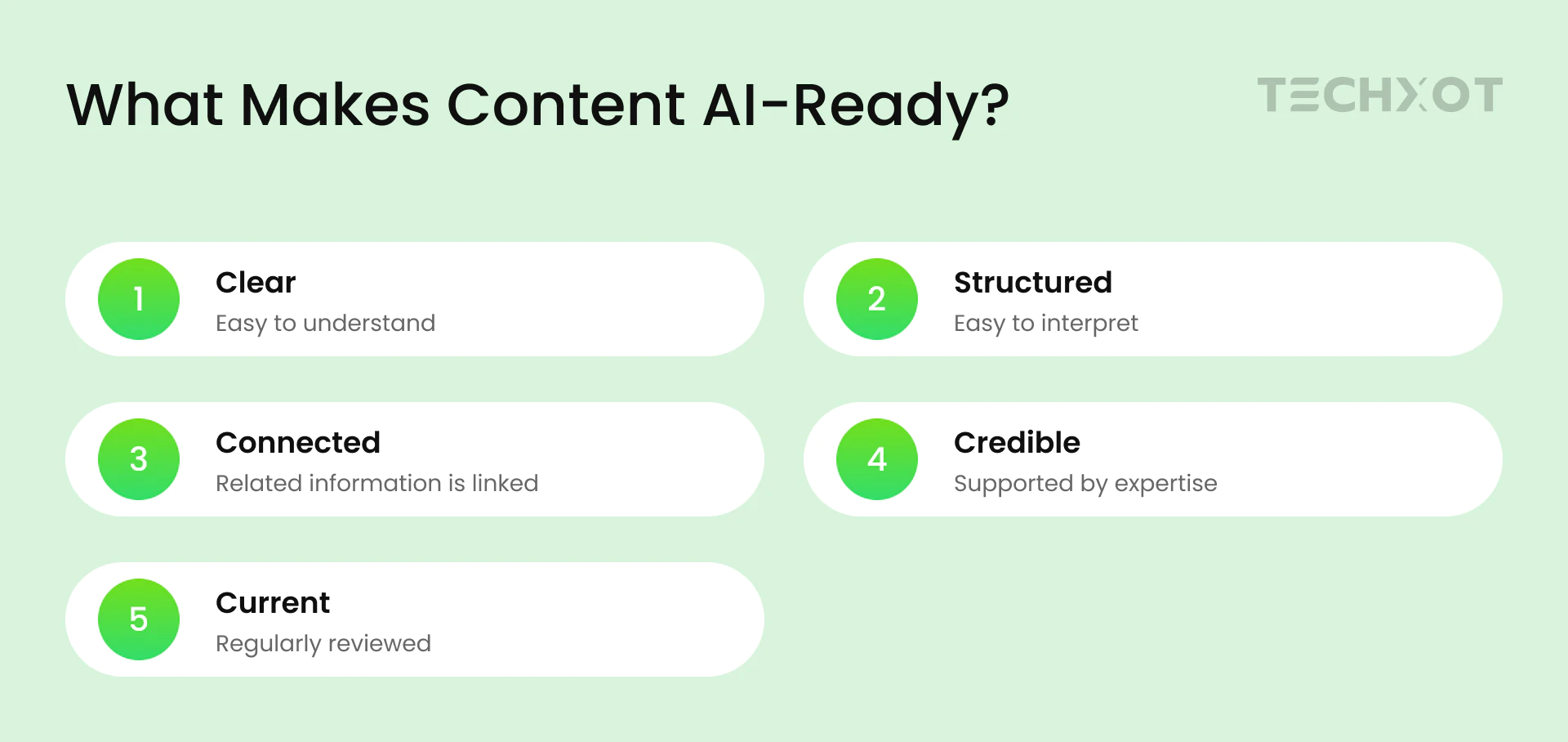
Content is required to be structured for AI using content types, descriptive headings, consistent technical terminologies, concise answers, tables, FAQs, lists, and internal links.
4. How To Make Umbraco Back-office AI-Ready
Content models should not leave information in unstructured text blocks. They should keep content consistent and reusable for AI systems to interpret and retrieve.
For example: A blog should require-
Author name and bio
Summary
Published date
Last review date
Supporting reference
Related content
Reusable content fields and consistent terminology allow data to be exposed reliably through APIs and other digital experiences.
The CMS back-office must make content practices easy rather than being dependent on editors to follow each step.
5. How To Use Schema to Clarify Content?
Schema markup is a machine-readable content about what the website pages represent. An Umbraco implementation may use a schema as follows depending on the type of content:
Organization
Person
Article
Services
Products
BreadcrumbsList
Website
Enterprises now choose auto-generated schema markup for AI search for structured Umbraco content rather than maintaining schema manually across thousands of pages.
Schema provides clear and reliable content that machines can interpret and doesn’t guarantee AI search visibility.
6. How To Turn the Content Delivery API Into a Controlled AI Data Layer?
Umbraco’s content delivery APIs support, AI assistants, personalization, RAG, enterprise search and AI agents. And exposing information through an API doesn’t automatically make it AI-ready.
However, enterprise must define the following:
Which content should be public
Which content requires authentication
Which fields must be exposed
Which permissions apply
How updates are handled
Which content remains restricted
In an enterprise CMS platform implementation, AI projects often demonstrate weaknesses in the digital experience system like duplicated content, inconsistent structures, unclear ownership, or over API access.
Enterprises need to understand AI readiness starts with architecture and content foundation strengthening.
7. Why Does First-hand Expertise Matter?
Publishing more AI generated content doesn’t promise more visibility.
Enterprise content must support genuine expertise through:
Original insights
First-hand implementation experience
Practical examples
Accurate and up-to-date information
Clear authorship
Enterprises need to understand that AI-ready Umbraco websites must consider AI readiness while Implementation, and not after the website is built.
When important content is stored inconsistently, duplicated, non-retrievable, and inaccurate. This making this information may require additional governance and transformation.
AI search visibility values the content explaining real implementation challenges, decisions, and risks over generic platform descriptions.
8. How To do AI Search Optimization for Umbraco Content for Questions and AI Agents
Enterprise content must be machine-readable content that should identify:
Audience and search intent
Important entities
Primary questions
Supporting proofs
Internal links
Related questions
Relevant schema
AI agents discover, interpret, retrieve, summarize, and recommend content before supporting user proofs.
Therefore, Enterprise Umbraco experience should have well-structured content, reliable APIs, up-to-date information, consistent content models, governance, and permissions.
9. How To Balance AI Content Discovery with Security
When content is made accessible for AI systems, it doesn’t mean making every piece of information available publicly.
Umbraco teams need to review the following before making content accessible:
Canonical URLs
Duplicate content
Robot.txt and Indexing directives
Authentication
API permissions
Content access rules
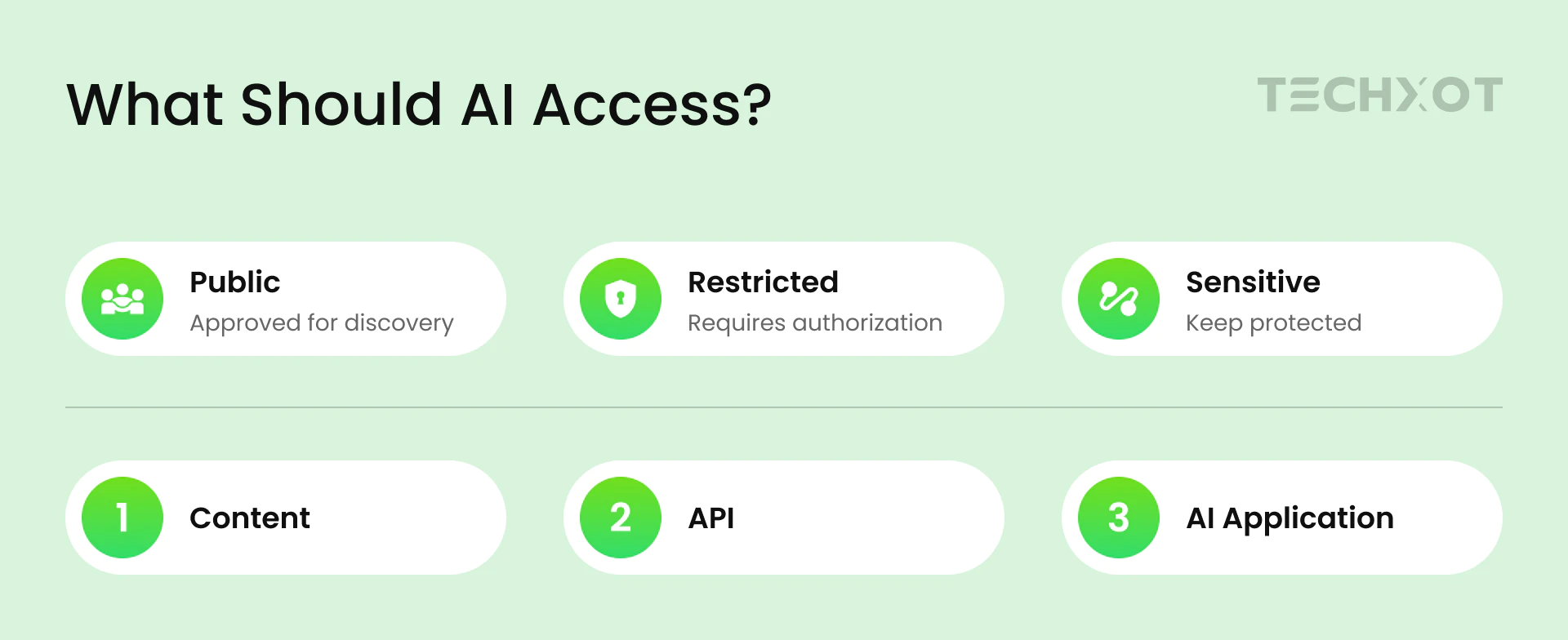
Content classification can help separate information in forms like; public, restricted or sensitive information. This can make AI workflows manage and follow those boundaries. AI ready websites must be secure and governed.
10. How To Measure AI Search Visibility and Business Impact
AI content discovery doesn’t mean appearing in AI-generated answers.
Track the following:
For visibility: Does your content appear in relevant AI responses?
For traffic: Do AI sources send visitors to your website?
Business impact: Do AI-driven visitors contribute to leads, conversion, or revenue?
Analytical analysis of these parameters can decide whether your AI search has a business impact. Combine AI analytics, search data, AI visibility monitoring, and referral information to understand the success of the enterprise business strategy.
11. Umbraco AI-readiness Checklist
Area | What to verify |
|---|---|
Content | Structured, accurate, and current |
Questions | Direct answers to user needs |
Entities | Relationships clearly defined |
Schema | Generated consistently |
API | Approved content securely retrievable |
Expertise | Genuine experience demonstrated |
Security | Restricted information protected |
Governance | Ownership and review defined |
Measurement | AI visibility and business impact tracked |
12. Final Takeaways
Design structured content for users and AI.
AI-generated answers for questions with real and useful content.
Use schema markup for AI search to deliver machine-readable content.
Secure your APIs and have control over AI permissions.
Demonstrate first-hand expertise with original insights.
Prepare AI agents and Umbraco with reliable content.
Measure real business impact not just AI search visibility.
13. Conclusion
Here most important question now isn’t:
“If Google can find your website?”
It’s rather: “AI-based search engines understand our Umbraco content well enough to discover, trust, retrieve and deliver to the intended users?”
So, if your content has authority, structure, secure and limited access, consistent and up-to-date information, you already have a strong foundation.
For enterprises, AI search optimization for Umbraco can be a real challenge and not just a simple SEO exercise.
Planning to make your Umbraco website AI-ready? as a certified Umbraco partner, can help you assess your content architecture, governance and your enterprise CMS platform foundation. This can surely contribute to your AI-readiness initiatives.