

Introduction
Imagine trying to shop and the website takes forever to load. Disengaging right?
The users in today’s digital landscapes expect that websites and applications load instantly, a delay of even a few seconds can cause the users to frustrate, disengage and bounce from the websites. Organizations must understand the impact here is on brand engagement, conversion, and website search rankings, all this can be compromised in just a fraction of seconds. The Sitecore XM cloud performance can be a game changer for enterprises struggling with these challenges.
The enterprises are depending on headless architectures and its implementation through proven strategies that optimize business growth. This guide helps you understand performance challenges, strategies, techniques, deployment and monitor Sitecore performance to deliver impactful digital experience platform growth.
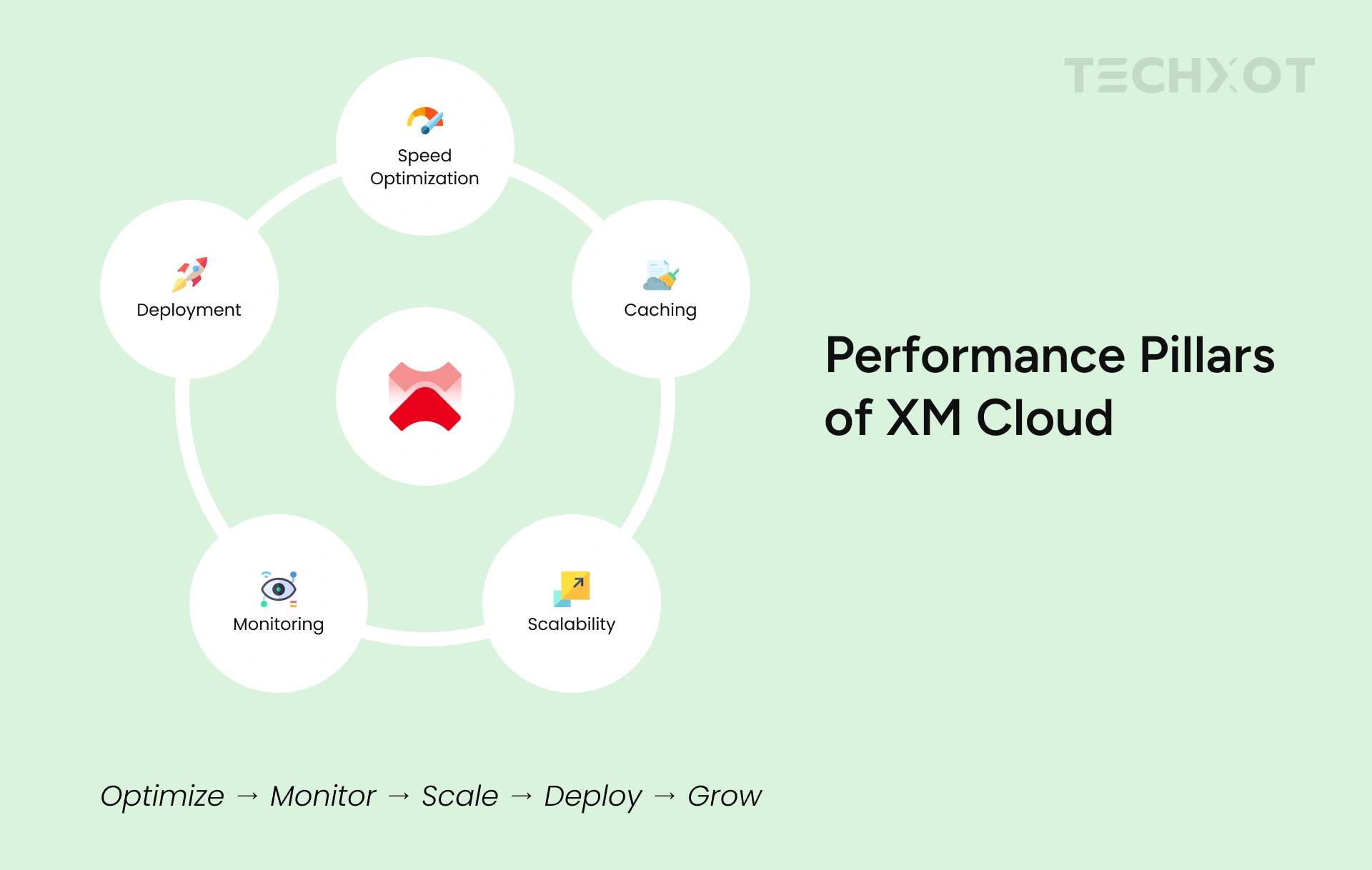
What Are Common Bottlenecks Affecting Content Management System Speed?
It is important for organizations to learn and understand what factors negatively affect the Sitecore performance.
Large media libraries:
When a webpage contains non-optimized images, videos and downloadable assets, they can contribute negatively to page weight and content delivery timeI
nadequate GraphQL queries:
The headless XM cloud architectures heavily rely on GraphQL. When these queries fetch fields that are unnecessary or fetch deeply nested content it can quickly add up to the response time.
Third party integrations:
The third-party tools for marketing, analytics, chat widget and personalization engines when not integrated carefully introduces latency in execution.
Excess personalization:
Personalization is powerful advantage, but it can soon turn into a disadvantage when system has to follow complex personalization rules for every execution. This burdens the application and impact application performance.
High traffic spikes:
When brands promote seasonal events, new product launches or targeted marketing campaigns they can experience sudden traffic spikes which can stress the application resources if it is not well equipped for scaling mechanism.
Understanding and carefully implementing these bottlenecks in the very first step can help improve XM cloud implementation and performance.
Best Practices for Caching in a Large-Scale Web Content System
Caching is one of the most crucial ways to improve XM cloud performance and reduce infrastructure load significantly.
Experience edge caching:
Experience edge cache and deliver content that is closer to the users, this allows improving page load times and reduce latency across the globe. Here are some of the benefits of implementing edge caching:Faster content delivery
Reduced server loads
Improved scalability
Use application-led caching:
When an enterprise website poses a piece of content that is frequently requested is cached it can reduce repeated processing and database request.
Few examples of application-based caching are:
API response caching
Component output caching
Session-independent content caching
Smart caching invalidation:
Even if caching improves page load speeds, stale and unvisited content can create issues. Creating cache invalidation rule can help brands manage freshness in content with performance. How can enterprises achieve this:
Automated cache purging after content publishing
Selective cache invalidation
Cache warm-up strategies after deployment
Cache dynamic content:
Not every content requires real-time rendering, it is crucial for systems to identify and understand which parts of content can be cached safely. This substantially improve website performance.
How Do Cloud Service Providers Enhance the Scalability of Content Delivery Systems?
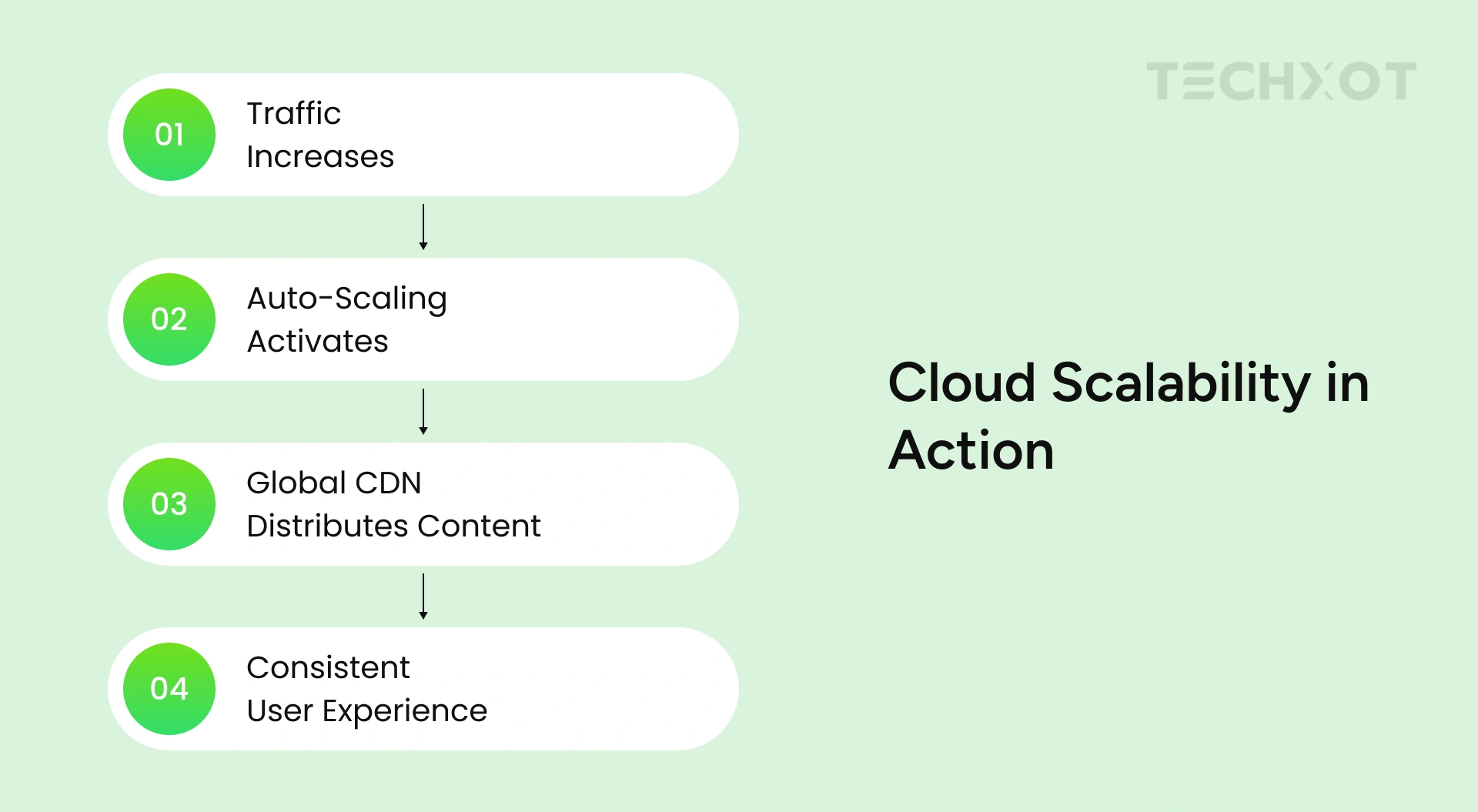
The cloud-native architectures are the biggest advantages of XM cloud in modern digital experience ecosystems. The new age cloud platforms are designed to handle sudden surges or spikes in traffic loads while maintaining consistent performance.
1. Auto scaling capabilities:
When the cloud platforms experience heavy spikes in traffic suddenly, it could automatically a lot more resources and scale down when the demand decreased. Some of the benefits include:
Better user experience during peak traffic hours.
Enhanced resource efficiency
Decreased operational overhead
2. Global content distribution:
The cloud-based Content Delivery Network (CDN) distributes content throughout the geographical region at dispersed locations, which resulted in ensured faster delivery to users.
3. High availability architectures:
To be able to maintain service continuity redundant infrastructures stand strong during hardware failures and other unexpected disruptions.
4. Preparing for traffic surges:
Load testing and capacity planning are important to enable consistent Sitecore performance even under high demand. Every organisation must be prepared for:
Product launches
Marketing campaigns
Seasonal sale events
Viral content spikes
What Are the Best Tools for Monitoring the Performance of Enterprise Web Platforms?
Performance optimization is not an activity to be done once in a while rather, it’s a continuous process. Continuous monitoring helps enterprise teams to identify challenges and issues early, even before they affect the user’s digital experiences.
1. Monitor user experience metrics:
Key monitoring metrics that help measure how users experience your platforms:
Page load times
Time to first bytes (TTFB)
Core web vitals
Bounce rates
Conversion rates
2. Application monitoring tools:
There are a number of monitoring tools available that help you monitor enterprise web platforms like:
Application insights
New Relic
Datadog
These tools are a way to understand application health, response times, and infrastructure performance.
3. Frontend performance testing:
There are number of tools available around the market that allows identifying frontend optimization and benchmark performance standards against industry standards. Example for tools:
PageSpeed Insights
Google Lighthouse
4. Real user monitoring:
The real user monitoring system uses actual visitor’s real-time user experiences and not a stimulated test. This allows teams to identify the following:
Geographic performance challenge and issues
Device-based bottlenecks
Network delays
When RUM is combined together with synthetic testing it results in performance monitoring strategies that are comprehensive.
Conclusion
The combination of optimization, monitoring, scalability planning, and deployment discipline together results in exceptional XM cloud performance. When enterprises struggle with Sitecore performance they should make a collective effort to reduce frontend bottlenecks, implement effective cache processing strategies, cloud scalability features and continuous monitoring systems which indicates platform health.
If you are looking for enhancing website speed, improve scalability and deliver exceptional digital experience for your users, the. Techxot can help.
To unlock the complete XM cloud performance strategy, partner with Techxot today to optimize Sitecore performance, stream deployments, in order to deliver digital experiences that scale.