
Introduction
Sitecore Implementation is not just a technical transformation; it’s a strategy driven transformation of enterprise digital experience environments. Sitecore offers multiple capabilities for content management, personalization and omnichannel experience delivery. When projects lack structure, they become complex, late, and costly.
This is the reason having a step-by-step Sitecore implementation checklist is important. It enables alignment between customer experience outcomes, KPIs, development, integration, and execution of the project.
This blog demonstrates how to choose the right implementation partner and full implementation checklist right from planning to post go-live optimization for the project to be successful.
How To Choose the Right Vendor for Sitecore Implementation Services?
Selecting the right implementation partner is the first step of strategy implementation for your Sitecore journey.
Key Consideration for choosing the right Sitecore implementation partner:
1. Certifications and Expertise:
It is crucial for brands to hire partners that have certified Sitecore developers with proven expertise and experience with implementation.
2. Industry Experience:
When choosing the Sitecore implementation partner, look for vendors who understand your enterprise industry market, trends and challenges closely. A vendor with Industry specific experience can bring knowledge and experience better than a vendor with diversified experiences.
3. Case study Portfolio:
Vendor capabilities can be easily evaluated with past use cases, case studies where they deliver scalable and personalized digital experiences for enterprises.
4. End to end capabilities:
Sitecore implementation is not just about migration from legacy platform to new platform; it is important to choose the partner that provides complete solution to strategy, development, integration and post-lunch support to enterprises.
Important pitfalls to avoid while choosing the Sitecore implementation partner:
Choosing based on cost
Overlooking long-term support capabilities
Omitting cultural and communication fits
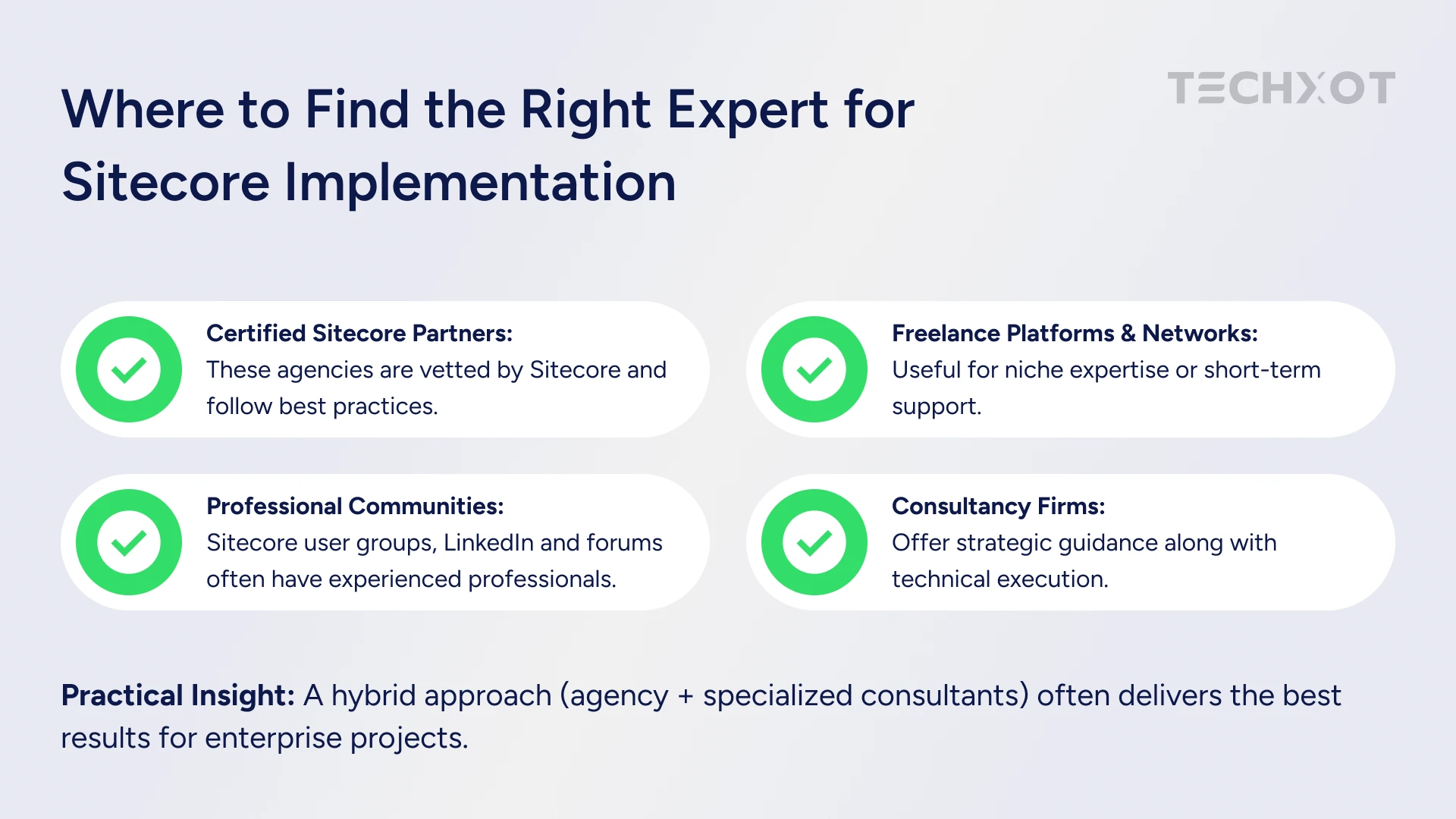
Where to Find the Right Expert for Sitecore Implementation
Step By Step Implementation Checklist for Enterprise Websites
Though vendor selection and strategy are important, successful implementation of the Sitecore project is the step-by-step execution that helps brands deliver real business value.
A structured and well-defined implementation checklist ensures planning to go-live aligns with business outcomes, customer expectations and scalability.
Pre Project to Go-Live: Complete Sitecore Implementation Framework
This checklist is not just a process rather a strategic roadmap for the entire implementation journey.
1. Planning and Discovery:
It is important for teams to start clearly defining and aligning business outcomes, key performance indicators, and success metrics to digital transformation goals. Teams should work on identifying their brand’s target audience, personalization opportunities, mapping user journey to the implementation strategy is experience driven. If this step the project scope is aligned, well communicated and clear.
2. Architecture and Experience Design:
When teams select architecture, it is important they choose the one that supports both current and future needs seamlessly. Enterprise brands need an architecture, a content model, and experience design that are scalable. The UI and UX designs must not only focus on brand image but also deliver personalization and omnichannel experiences. This is an important step because a poorly designed structure can create technical debts, costly and complex implementations and limit Sitecore capabilities.
3. Development and Integration:
Development teams should create reusable components so it is easier to maintain consistency throughout and make deployment faster across pages and channels teams must integrate CRM, CDP, analytics and marketing tools to create unified data driven experiences that deliver business outcomes.
4. Content strategy and Migration:
Teams should conduct complete audits to identify and declutter outdated and low performing components before they head to migrating content. After the redundant components are removed, map content on new systems to ensure consistency and relevance to deliver aligned experience strategy. If this step is missed and content is migrated without optimization, it leads to experiences that miss personalization capabilities.
5. Testing and Quality Assurance:
Once the content is optimized and migrated, they can move forward with testing for quality assurance, performance, security, and Personalization capabilities. This step requires real-time use cases to validate platform meets flawless experience delivery for both the business and the users.
6. Go- Live Readiness:
Now teams need to prepare for the smooth launch start with finalizing content, configuring analytics, tracking tools and backups. Internal teams must be trained for rollback strategies for migration risks and manage platforms effectively. Preparing well in advance for this launch can help reduce downtime, prevent last minute issues, and build team confidence.
7. Post Go-live Optimization:
Deploy a platform with confidence and the next step is to monitor customer behavior, performance, and platform stability in real-time. Teams need to closely monitor, record early insights, and quickly fix any issues to start optimizing experiences instantly. This phase is quite critical, and setting performance benchmarks can emit future opportunities for scaling the digital platform.
Best Practices for a Comprehensive Sitecore Implementation Checklist
Post-Launch Evaluation and Optimization Strategies
Going live is not just the end of execution; post-launch optimization maximizes ROI.
Performance Monitoring:
Teams have to track site performance, uptime, and customer behavior to seamlessly identify issues earlier and fix them to maintain a smooth experience.Analytics and Insights:
Tracking user behavior creates user data and analyzing it can help teams understand engagement patterns, intent and conversion trends that is important for delivering digital experiences.A/B Testing and Experimentation:
Teams must understand that not one content is for everyone, so teams need to create content and design variations and test them and identify which works best for your audience.Personalization And Optimization:
Understanding user intent and interactions to build personalization strategies helps teams improve relevance and user engagement instantly.
Content Optimization:
It is important for teams to continuously update and optimize data to keep user journeys and personalization strategies relevant and effective to improve user experience and SEO performance.
Quick Dive in Sitecore implementation checklist

Conclusion
In A successful Sitecore implementation strategy planning, finding right partners, and a structured approach are equally important that just focusing on the technical execution.
When an enterprise brand team follows this step-by-step Sitecore implementation checklist, they can reduce risks and increase efficiency to deliver digital experiences that majorly drive results.
At Techxot we help enterprises to unlock full potential of Sitecore capabilities strategically and ensure optimization on every step to deliver exceptional digital experiences that justify Sitecore implementation investments into growth engines.
Every step in the checklist from choosing the right Sitecore implementation partner to post launch optimization bids critical roles for ensuring long-term success. Those organizations who implement Sitecore as a journey and not a one-time project truly unlock the full potential of Sitecore in future. This, the difference between a simple Sitecore Implementation and the greatest one lies in planning, execution and continuous improvements.