
Introduction
Over a few years, enterprise teams have relied on assumptions and play books to determine the best practice to deliver an online experience. Today, the customers expect a lot more than just flashy web pages with all good graphics and user experience; they need – personalization. The customer expectations have shaped the digital experience industry to implement digital strategies and approaches. In digital ecosystems where your digital strategy defines how the user will feel about your brand; having a great brand experience is a real competitive advantage.
Techxot is a Sitecore Solution Partner and helps brand achieve personalized experiences to their users at every touch point. At Techxot, we don’t just build personalized tools for brands; we help brand design and implement their experimentation ecosystem.
Sitecore experience optimization has become transformative in this digital world; promoting decision making depended on real user behavior data
Introduction to Experiments in Sitecore Personalization
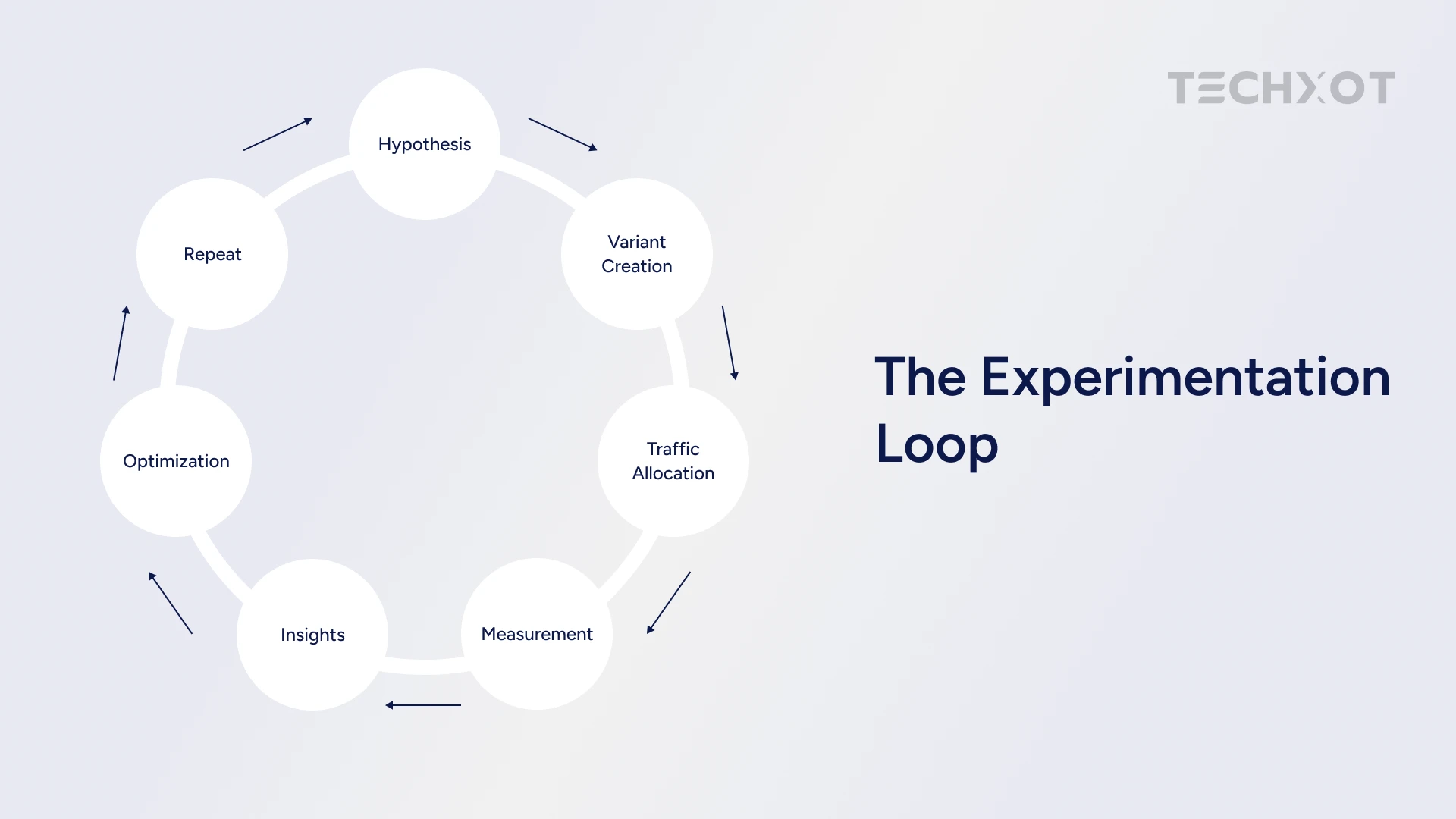
Sitecore experiments are not just A/B testing but a process to determine and validate the customer data-led framework to create decision strategy and logic paths. Experimentation allows teams to prove customer preferences through measurable statistics and eliminate opinion-based decision making where teams just assume what the customers prefer.
There can be multiple experiment approaches like:
1. Controlled testing of variants:
To eliminate bias, target customers are segmented carefully, and multiple versions of experience are run through.
2. Statistical measurement of performance:
Results are evaluated and compared to the predefined KPIs, so the decisions are data backed.
3. Automated traffic allocation:
A structured system is used to deploy traffic evenly to all the variants to perform accurate comparisons.
4. Real-time reporting and insights:
Enterprise teams get hold of real-time data and analytics and monitor live performance and respond simultaneously to the emerging trends.
Sitecore experiments enable teams to have multiple variants to targeted and segmented audiences instead of publishing a full redesign or new campaign without any set constraints to compare the performance. Sitecore experience optimization allows performance measurement in predefined KPIs like CTR, conversion rate, engagement rate, and ROI.
Experiments lower risk in campaigns by containing the underperforming variants.
Types of Experiments in Sitecore Personalization
Every business goal requires a different experiment format. Experiments in Sitecore personalization allow enterprises to create A/B test experiments and optimize them for content, offers and journeys for customers based on behavioral patterns.
Web Experiments
Web experiments focus on elements that interact with users directly, for example, web pages. This experiment allows personalization on web pages without developer dependency. Web experiments are statistical tests that run on web and web-based applications to test offers, next best actions, content variety, and personalized customer experiences.
How Do Web Experiments Work?
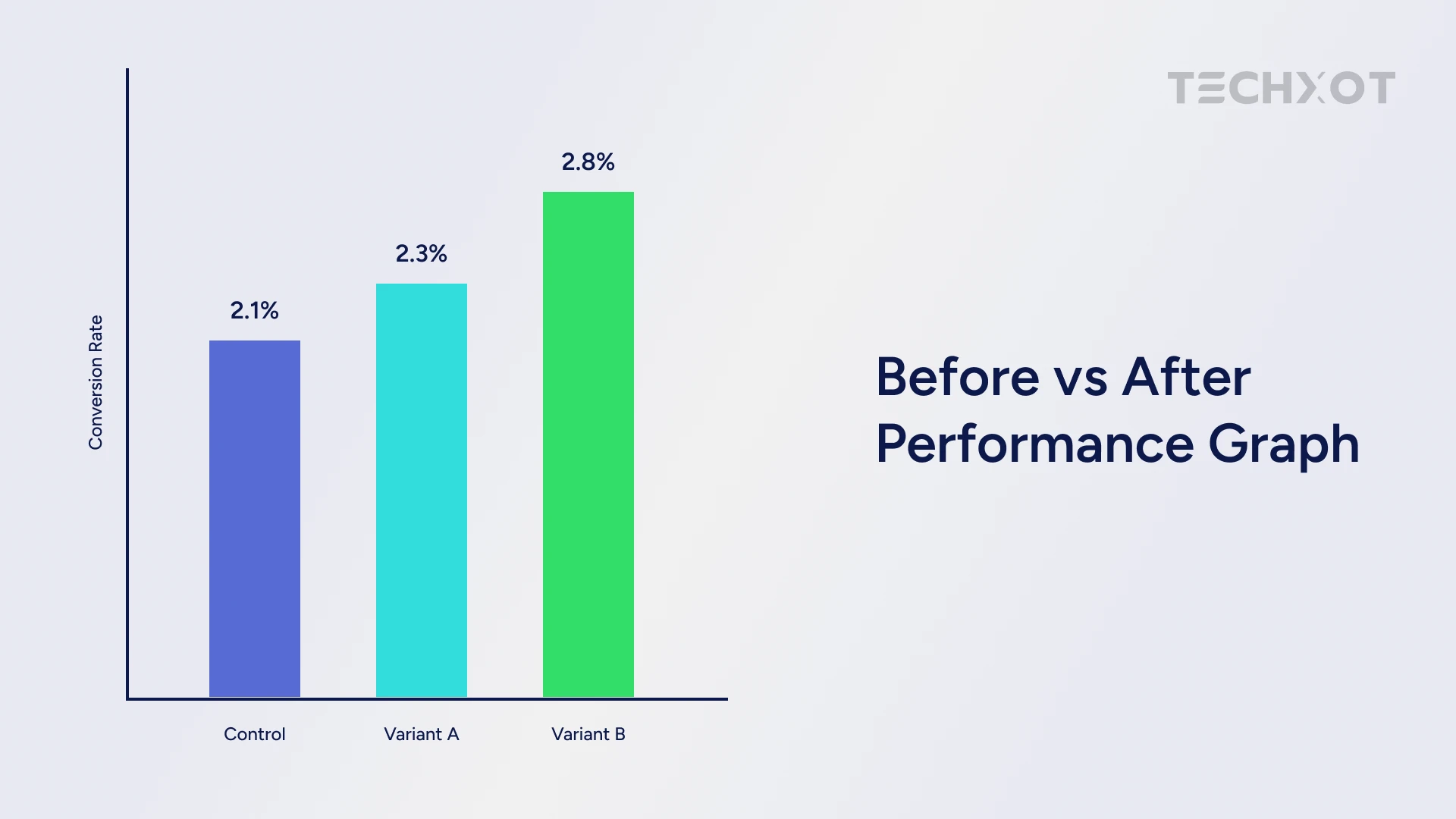
For example, lets test a redesigned “pop up” or “latest update” for more conversions against the existing experience.
Variant A: Pop up designed with new images
Variant B: latest updates page
Variant C: Existing web page experience
Now the teams start with statistical comparing multiple variants before rolling out changes. Some customers see variant A while some see variant B and others variant C. Any variant which outperforms customer experience is declared as a winner
This winning variant is chosen for optimizing engagement, CTR, and conversion rates and is set as a default experience on the web page.
Interactive Experiments
Interactive experiments are designed to personalize backend or server-side environments like APIs, apps, kiosks, and backend driven experiences. These experiments allow marketing teams to test offers, pricing logics, next best action and recommendations before delivering content experience to the customer.
How Do Interactive Experiments work?
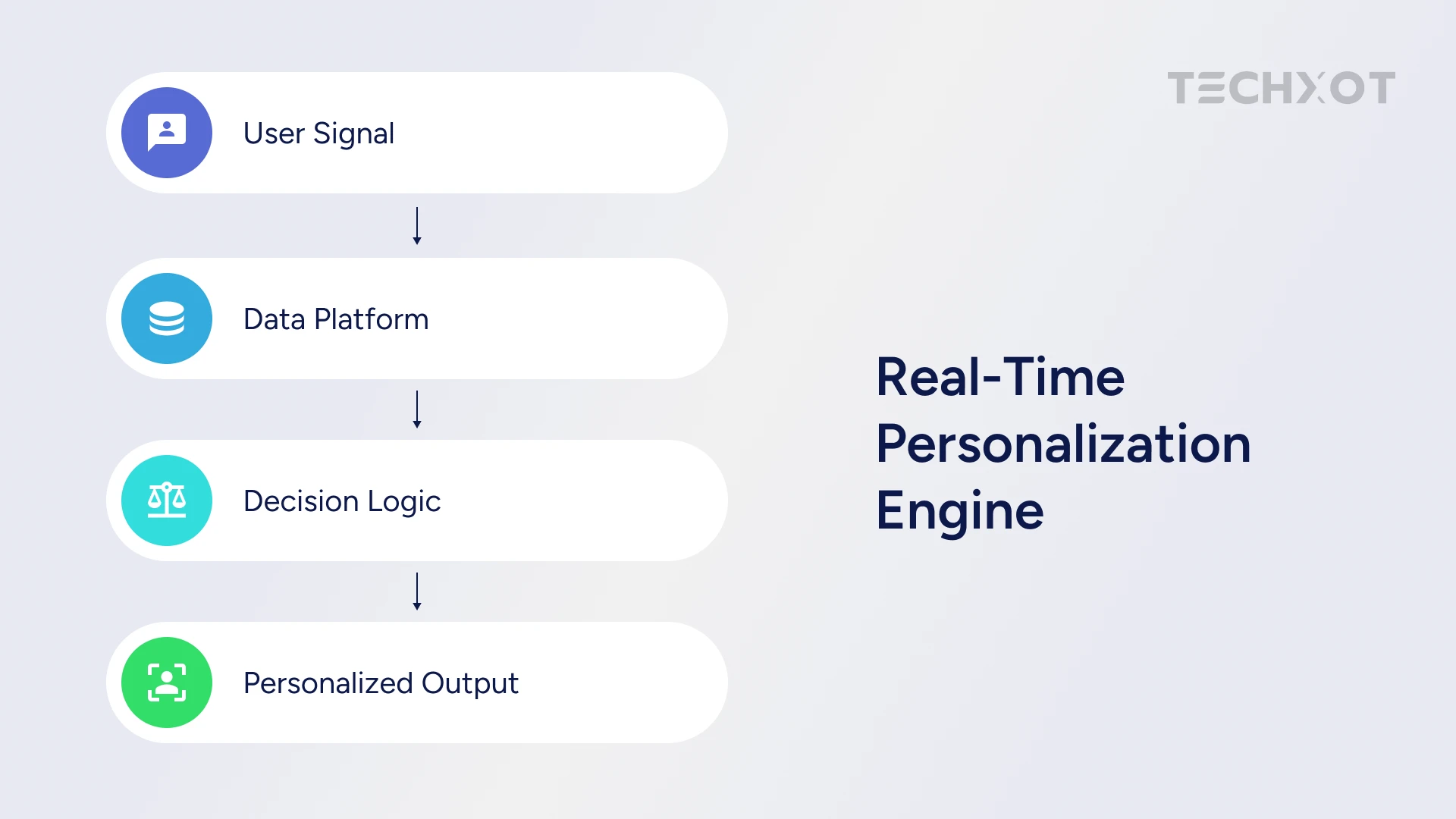
For example, let’s take variants that operate through a decision model that is either “rule based” or “alternate logic” against a variant of existing logic to deploy pricing strategy on a banking mobile app to see which one initiates complete transaction.
Variant A: Rule-based recommendation decision logic- “Offering credit card based on income”
Variant B: Behavior based recommendation logic- “Offering credit card based on recent spending”
Variant C: Existing decision logic
Enterprise teams test these variants for 2 recommendation logics in a banking app to determine higher product adoption. Teams test these 2 logics along with the existing logic and determine which variants drive higher credit card purchase is set as default message variant. These experiments promote high performance models into existing environments and continuously refine decision strategies and logic paths on evolving behavioral customer data.
Triggered Experiments
Triggered experiments deliver personalized experience when customer behavior triggers communication n email, SMS, and push notifications. Teams can set predefined behavioral conditions, when this condition is met the trigger is automatically activated and a personalized message is pushed.
How Do Triggered Experiments Work?
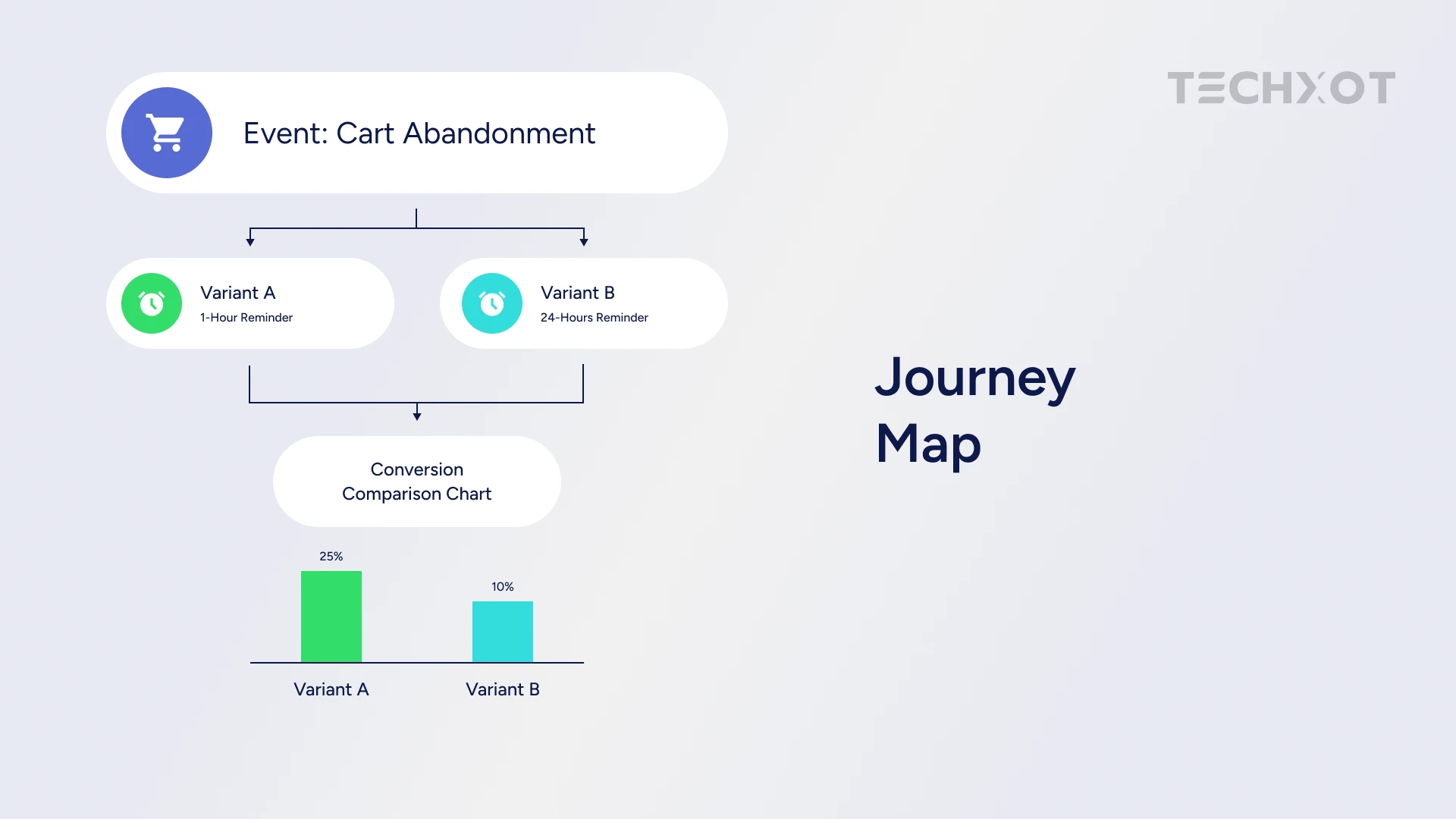
Let’s consider message variants that will be triggered by a similar event, for example; cart abandoned.
Variant A: Discount focused cart abandoned email- “Complete your purchase and get 10% discount NOW!”
Variant B: Urgency focused reminder email- “Last pieces remaining- soon out of stock!”
Variant C: Existing live template
When the customers abandon the cart, teams test all these variants and determine higher conversion rate email and set it as a default email.
Let’s say your team sends cart abandoned emails to customers out of which some customers received variant A and some customers received variant B. If A brings 15% customers and B brings 10% customers while the existing template brings 12% customers, then variant A is a clear winner, and it will be set as a default email.
Strategic Value of Experimentation-Driven Personalization
1. Data-driven decision making:
A lot of teams face internal bias in digital strategy since teams are influenced by opinions, design preferences, and past performance metrics while making decisions. Data-driven decision-making means testing variants against KPIs like engagement metrics or conversion rates. This shifts the decision tone from “We think this may perform” to “Data shows this performs x% better” proving it to be a complete game changer.
2. Reduced risk:
A poorly designed non-engaging digital experience can directly have a negative impact on the way the customer experiences the brand and converts. In Sitecore’s experiments, this risk is played off right. Variations are performed on small segments of customers before they are rolled out for every customer. If any variations underperform, it is immediately ceased.
3. Faster learning and competitive edge:
Sitecore experiments encourage enterprises to test not dozens but hundreds of ideas annually. Every experiment generated insights, every time an experiment is run it either fails or is a success it compounds customer preferences and behavioral pattern insights over time. All this helps organizations adapt faster to market changes, customer expectations, and possess competitive agility. Experiments don’t make organizations wait months to evaluate campaign performance rather optimize them in real-time.
4. Revenue optimization and ROI:
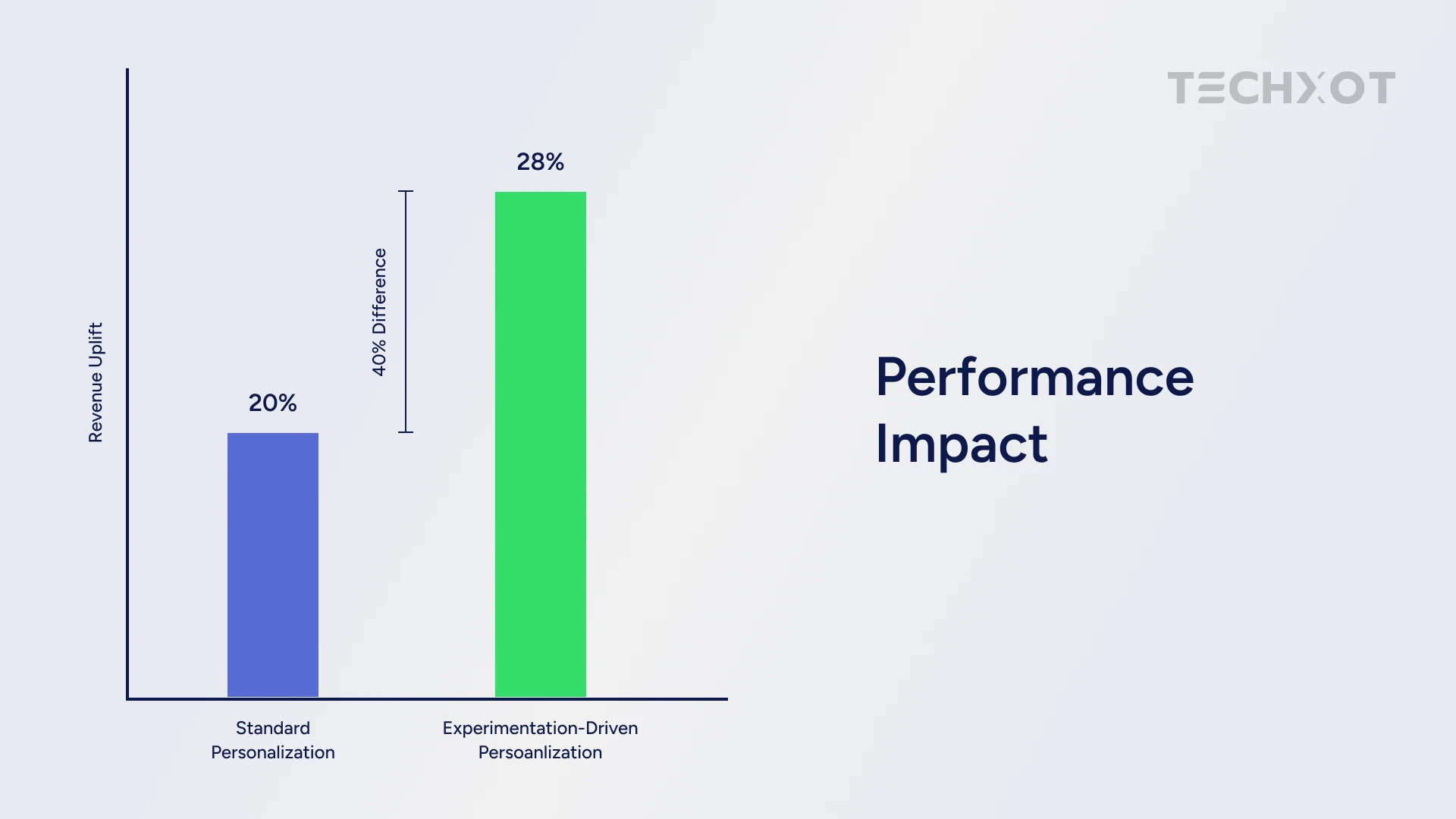
Experimental personalization has a direct impact on ROI. It focuses on optimizing business measurable metrics like conversion rate, retention rate, and average order value. Studies from Epsilon suggest that personalized communication has shown 6x more transactions compared to non-personalized ones.
The Future of Digital Experience Continuous Optimization
Digital experiences now don’t mean redesigning and campaign improvements; rather, it is an always-on capability where every instance of interaction is recorded to measure, analyze, and optimize it in real-time.
In 2026, digital experiences are not static, but continuously optimized campaigns because platforms are evolving into adaptive systems with AI and real-time decisioning. AI powered decisioning and experimentation in Sitecore personalization brands can now optimize campaigns, content, offers, and journeys with behavioral triggers and decide how the customer experiences the brands at every touch point.
Marketing teams now don’t have to manually optimize the campaigns anymore; experimentation tests multiple variations of campaigns, gathers all insights, instantly learn and opt for high performing variation.
The new future of personalization is where:
Every instance creates data
Optimization is predictive and autonomous
Every experiment can be tested
Brands that can give customers personalized experiences based on behavioral patterns at the touch points, embed experimentation in their business, learn, validate and optimize continuously will surely make a competitive advantage in the coming future.
Conclusion
There are several enterprises that invest in platforms thinking the new platform will do the work. These enterprises struggle to generate measurable business outcomes even after having the best platforms, AI capabilities, and data systems. Brands need to understand that personalization alone doesn’t guarantee results. Sitecore experiments can change this for brands; experiments give opportunity to learn. Instead of relying on assumptions and opinions, organizations experiment with multiple message variants to determine the high traffic variant that give measurable business outcomes that are measured through CTR, conversion rates, customer engagement rate, revenue rate etc.
Let Techxot help your brand turn your experiments into structure growth engines, personalize to derive measurable business outcomes. Get in touch with our team today!