
Introduction
According to the new customer interaction trends, customers no longer interact with brands through a single channel. The new age customer has set different experience expectations altogether. Customers browse products on mobile apps, compare product options on website, ask questions in chat bots, expect support on social media platforms and visit physical stores, they expect all these in the same journey. When fragmented digital systems are created, disconnected experiences result in frustrated users and lost brand trust.
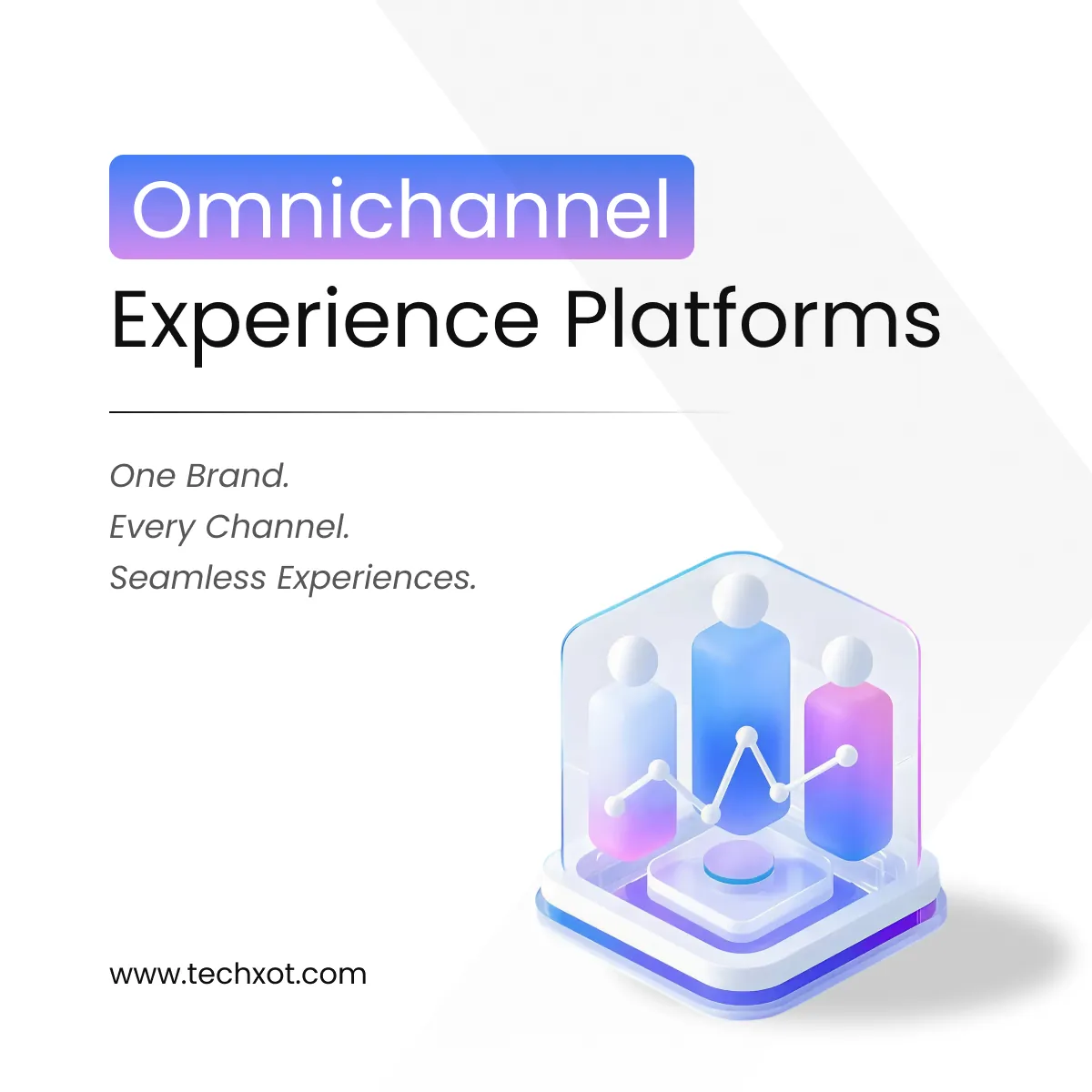
The omnichannel CMS can stand tall solving all the challenges by unifying customer interactions across all user touch points. The Sitecore omnichannel experience platform ensures that every customer receives a consistent journey in messaging, personalization, service quality, and brand voice. This Sitecore feature delivers omnichannel experience to the user even if they engage with brand online, offline or anywhere in the middle.
Introduction To the Sitecore Omnichannel Experience Platform?
The omnichannel CMS is a technology that allows enterprise brands to create, implement, and deliver customer journeys. These journeys are delivered to users through multiple channels using a unified system.
Omnichannel experience platforms connect customer journeys at a unified system while the multichannel strategies for each channel operate independently, making multiple customer journeys and fail to give single continuous experience. Multichannel strategies work through multiple disconnected channels, while omnichannel strategy works through multiple channels but connected customer journeys.
The omnichannel experience platforms integrates multiple components like:
User data
Commerce systems
Content management
Personalization engines
Marketing automation
Analytics and insights
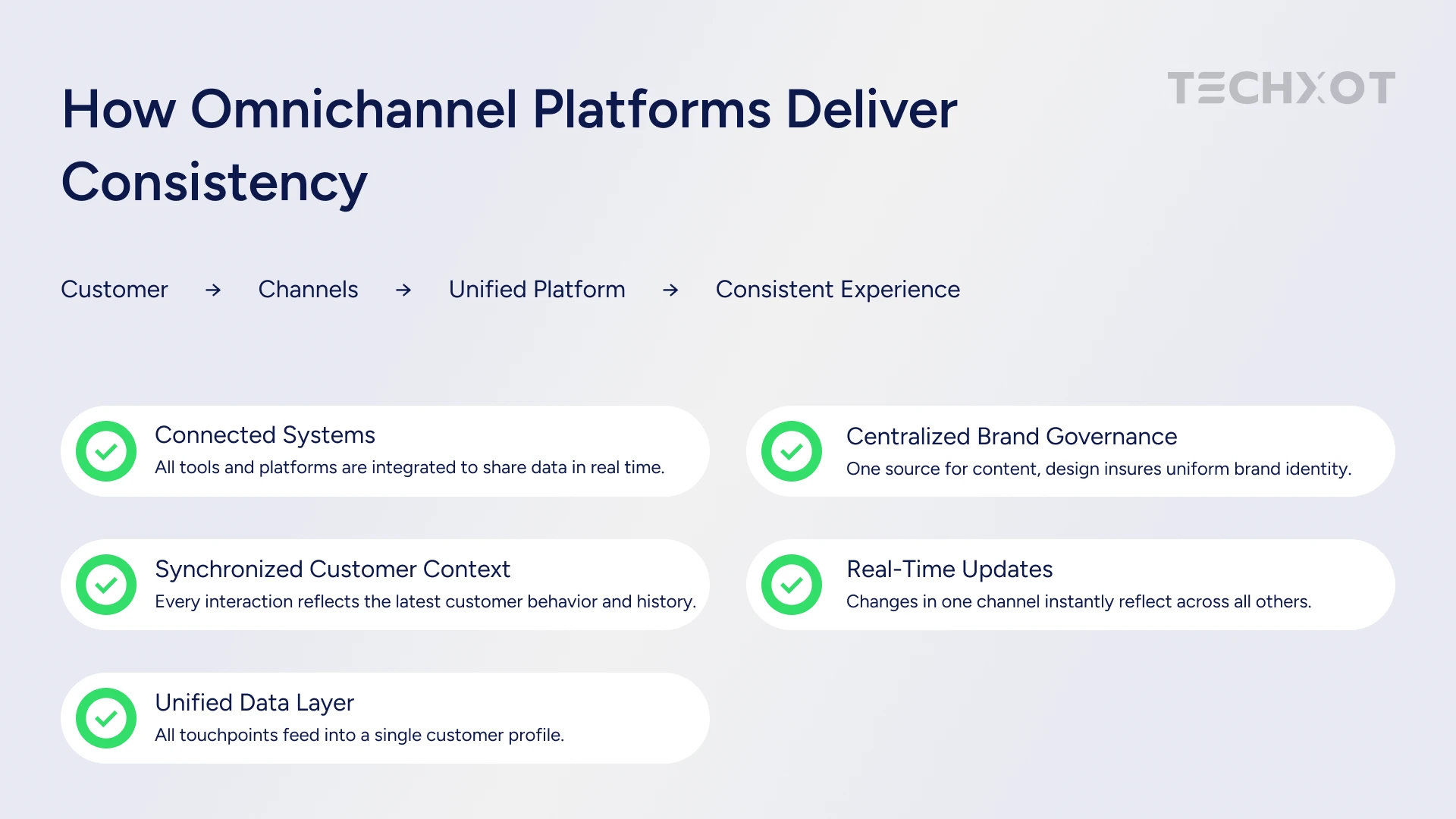
All these components work together to deliver the same brand story customer experience every time.
Why Omnichannel Consistency Matters?
n the modern era the new age customers want continuous journey, the customers now a days don’t want channels they want experiences that are seamless and continuous.
The omnichannel CMS needs consistency because customer expectations have increased. And now users expect brands to:
Remember user preferences
Continuous conversations across channels
Offer consistent pricing
Promote continuously
Provide unified view of user history
When this doesn’t happen, users experience friction and customers lose loyalty toward the brands.
On the other hand, when the customer is led by consistent omnichannel experiences it impacts business and becomes revenue driver.
Important business impacts of consistent omnichannel experiences are:
High engagement rates
Increased conversion
Improved retention
Improved customer lifetime value
Strong brand trust
Core Capabilities: Omnichannel Experience Platform
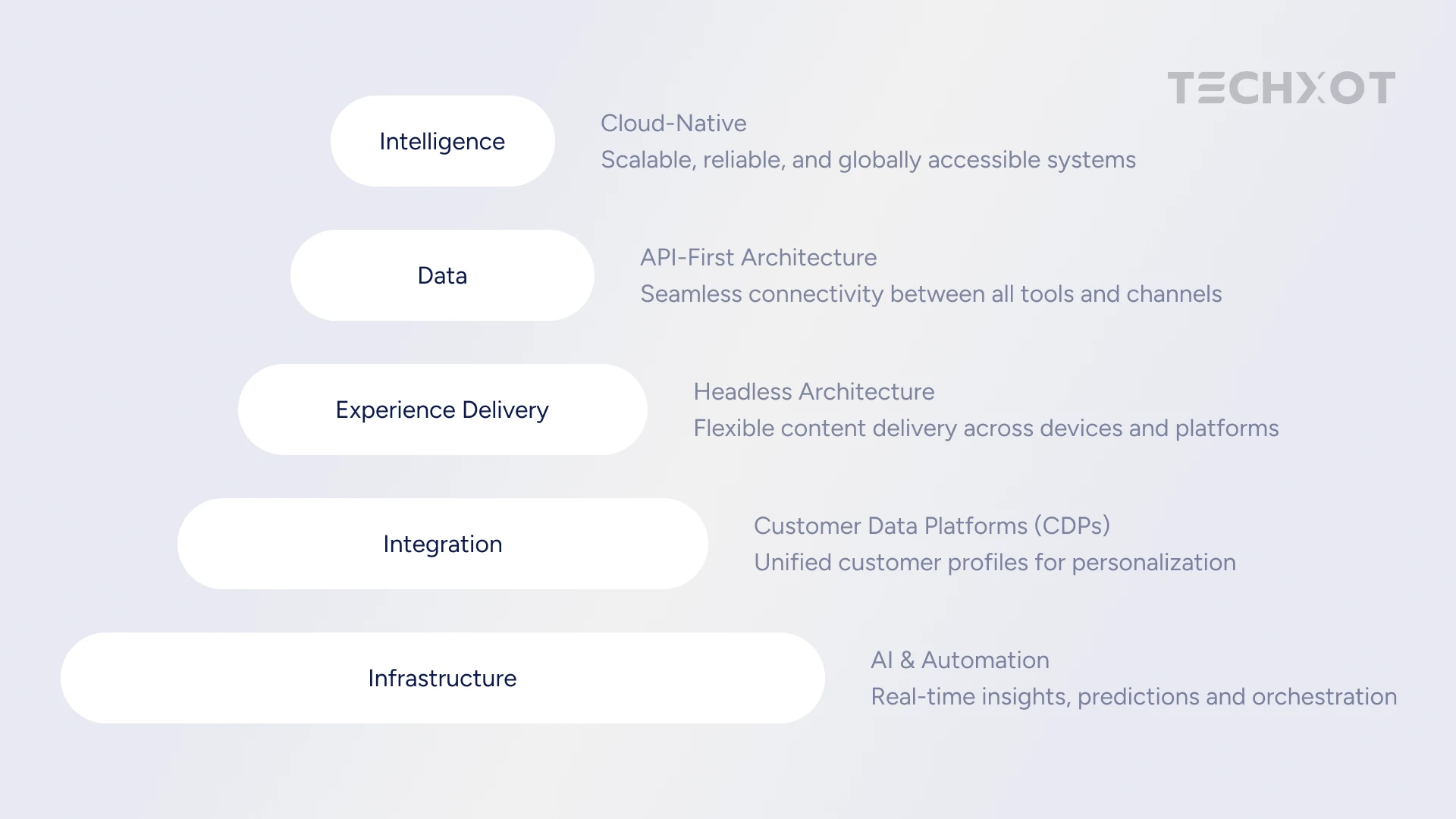
The Sitecore omnichannel experience platform delivers seamless experience and to ensure this there is a set of integrations that allows content, data and interactions to keep them connected.
1. Unified Customer Data
Omnichannel CMS unified all interactions from web visits, app usage, purchases, service request in a centralized user profile. This enables:
Complete journey visibility
Accurate segmentation
Personalized messaging
Context-driven interactions
2. Cross Channel Content Delivery
In omnichannel CMS content is created only once and is intelligently distributed across platforms like:
Mobile apps
Social media platforms
Offline store screens
Emails
Voice assistance
Websites
All this can be achieved through headless and API-driven architectures that make all this work.
3. Real-time personalization
In omnichannel CMS, when customer behavior triggers different dynamic content updates like:
Product recommendations
Targeted offers
Location-based messaging
Behavioral triggers
The experience instantly adapts to customer context, intent and interactions.
4. Journey orchestration
Omnichannel experience platforms map customer journeys. The platform follows following journey to map and automate journey orchestration:
Awareness -> Consideration -> Purchase -> Support -> Loyalty
The journey orchestration is based on automated triggers based on user action and intent, this enabling consistent messaging across channels.
5. Integrated analytics
Omnichannel CMS platform gather all analytical data from all touch points and feeds it to a unified analytical layer where it records different metrics like:
Journey performance
Drop-off points
Campaign effectiveness
Channel contribution
These metrics allow insight-driven continuous optimization.
Common Challenges in Omnichannel CMS Adoption
Although the technological benefits can be clear, implementation strategy for omnichannel comes through several challenges in operations and technology.
1. Data Silos
When user journey data is scattered across all systems, it prevents creating a unified view of user behavior and interaction.
2. Legacy Infrastructure
A seamless omnichannel experience can be achieved by flexibility and integration capabilities, while a legacy infrastructure lacks an important system stack which creates friction and brands lose customer loyalty.
3. Organizational Silos
When an enterprise brand fails to create a unified messaging ecosystem, that keeps teams disconnected can lead to inconsistent messaging and create fragmented customer journeys.
4. Content Fragmentation
When teams are disconnected, they create separate messages across channels, this resulting in an inconsistent brand voice and experience.
5. Privacy Compliance
Personalization and integration are important when managing customer data across channels; it is also important to meet privacy and security regulation requirements which may contribute to complexity issues.
Best Practices for implementation of Omnichannel experience platform
It is important that we choose an approach to implement and scale omnichannel experience platforms.
Step 1: Start the User Journey
Start with mapping real customer interactions that will help design experiences that align with actual customer behavior.
Step 2: Unify Data Early
Gathering all user data from all channels to create a centralized user data layer ensures consistent personalized experiences.
Step 3: Adapt Flexible Architecture
Using modular architectural capabilities like flexibility and API-driven systems that help quick adaptability and scaling across multiple channels.
Step 4: Enable cross-team Alignment
Alignment of all teams’ marketing, sales, and service teams around shared goals and customer insights.
Step 5: Provide Experience Governance
The enterprise brands need to create one brand experience for all the users interacting at any touch points.
Step 6: Optimize Continuously
Enterprise marketing teams should improve user journeys using A/B testing and real-time data.
The Future of Omnichannel Experience Platform
The omnichannel experiences enable brands to remove friction and deliver seamless experience and help enterprises move beyond just channel alignments into experience ecosystems that are empowered by intelligence and automation.
The new age omnichannel CMS platforms will deliver:
Predictive journey orchestration
Easy online convergence
Hyper-personalization that scales
Voice interface support
Automatic experience optimization
As the new trends and customer expectations unfold, the increase in the number of digital touchpoints will lead the brands in a direction where omnichannel ecosystems will become an important competitive differentiator and not just any other operational goal.
Conclusion
The customers tend not to remember the channels rather remember the journeys and so when the brands that are capable of delivering seamless and connected journeys across every touch point, and build strong brand presence which create stronger relationship, high trust, and long-life customer loyalty.
Omnichannel CMS provides a foundation for consistency by unifying tech stack, data stack and strategy in one ecosystem.
At Techxot, we help enterprises brands deliver seamless, consistent and experienced-driven customer journeys with omnichannel CMS excellence.
Get in touch with our team today!