
Introduction
Search has completely changed in the past few years. Businesses would entirely depend on Search Engine Optimization (SEO) to improve search engine rankings on Google and attract website traffic. After the rise of artificial intelligence, the AI-powered searches are redefining how users find and get information online. 68% and more of the online experiences start with a search engine.
Like in the old days, now people don’t need to browse too many websites for a piece of information. Rather users now interact conversationally with questions and receive answers instantly. Users use AI-powered tools like OpenAI, Chatgpt, GoogleAI, and many others.
This new type of optimization strategy is called Answer Engine Optimization (AEO). In SEO, it helps in website ranking on the search engines, while in AEO, the focus is on making content the answer chosen by the AI systems.
It has become very crucial that marketers, businesses and content teams understand the visible evolution in search landscape and learn SEO vs AEO difference. Because search is shifting big time from browsing links to receiving direct answers.
What is SEO?
SEO (Search Engine Optimization) is a method to optimize websites to rank high in search engine results. The motive of SEO is to increase website visibility, drive traffic, and increase conversions on landing pages.
Brands need to understand that more than 53% of the website traffic comes from organic searches, where SEO drives high and long-term ROI than any paid channels.
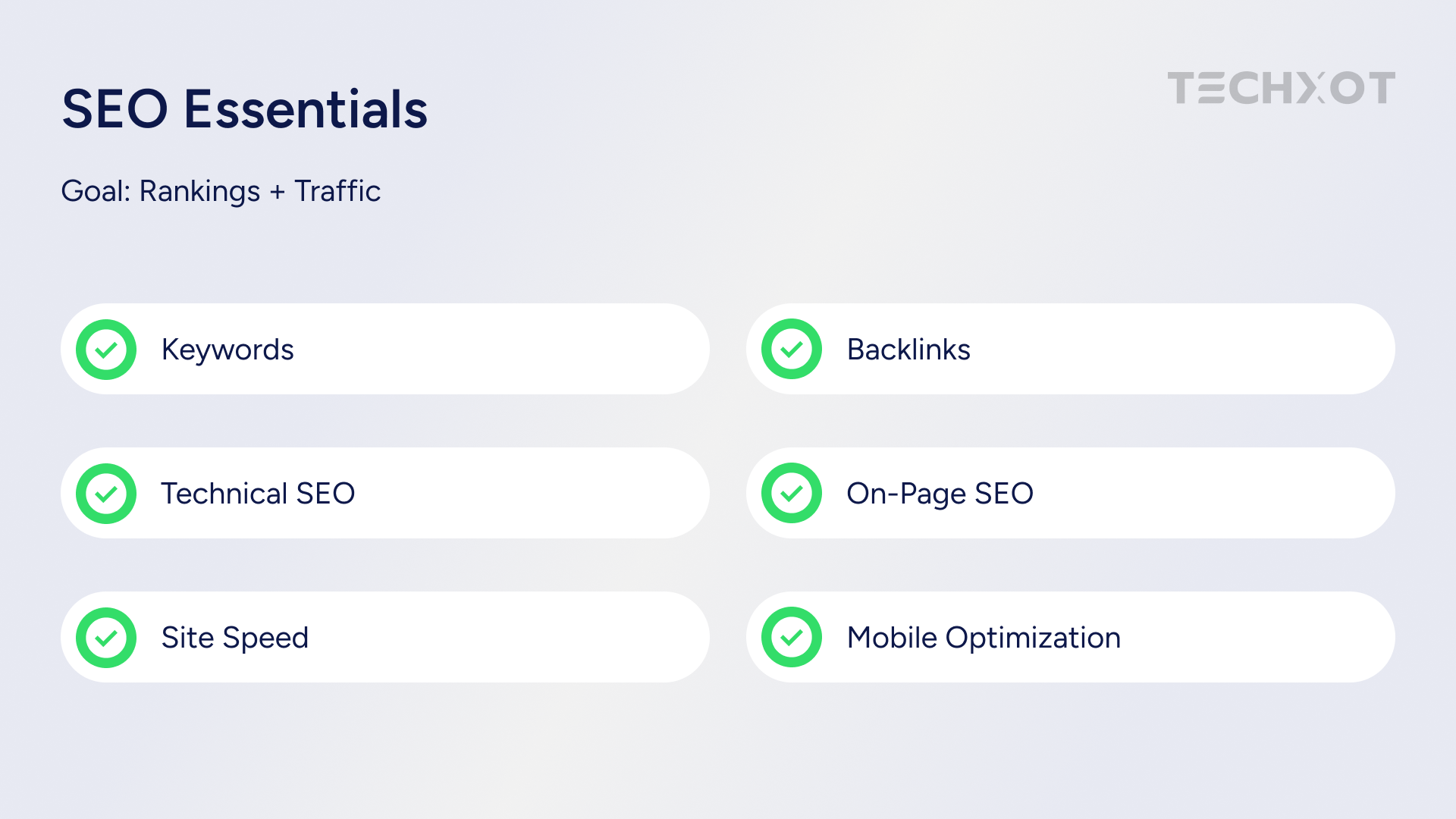
When a team works to implement and execute a strong SEO strategy, they should work on website speed, optimizing keywords, building backlinks, and creating content with high quality which aligns to the search intent.
Key features of SEO:
Keyword research and optimization
Technical website improvements
Building backlinks
On page content optimization
Mobile responsive designs
Improved user experience
Search engine optimization works in a way by helping search engines understand that your website is relevant, trustworthy, and a match for your search query.
What is AEO?
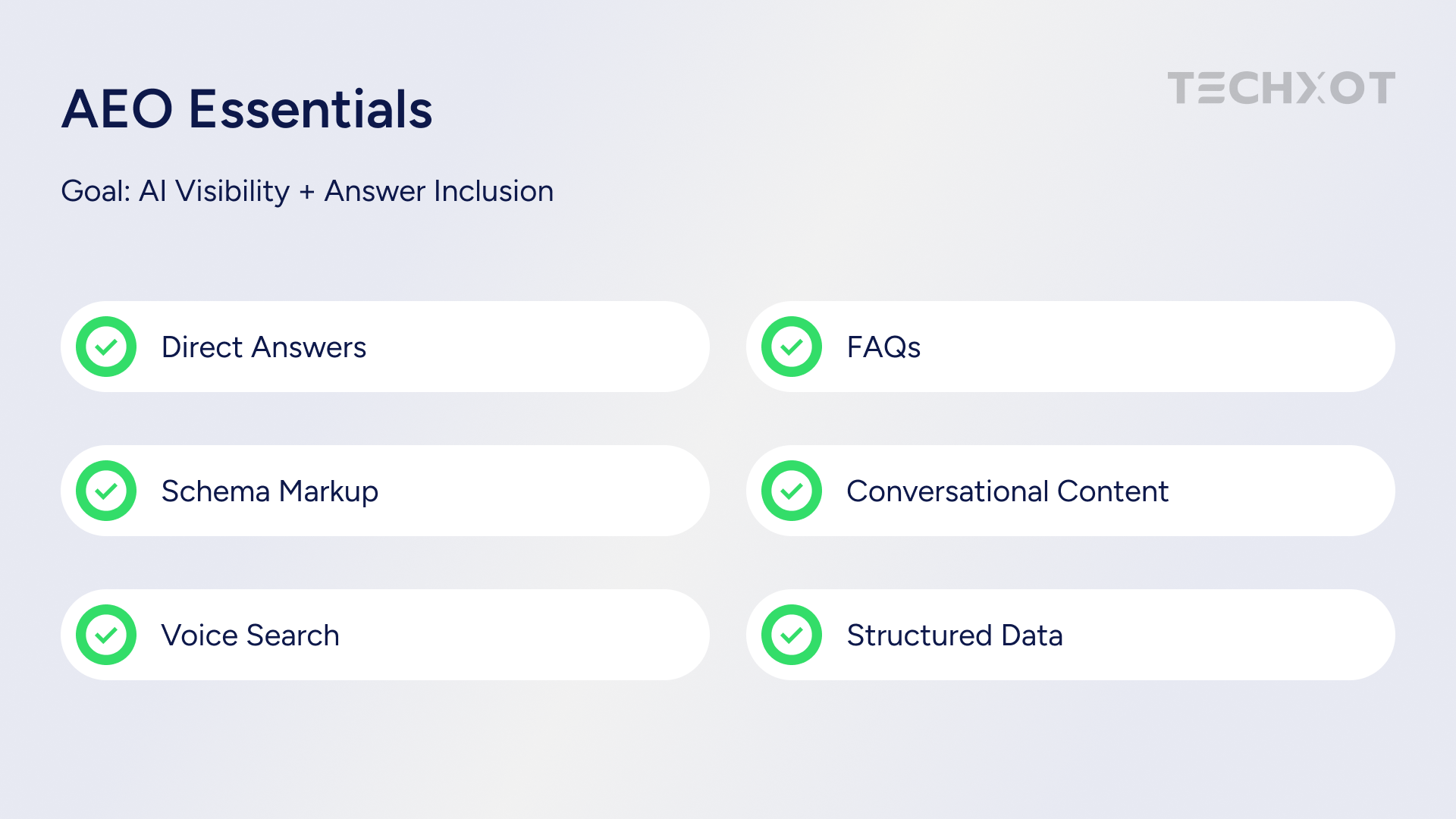
AEO (Answer Engine Optimization) is the method of optimizing content for AI-powered engines, so they extract and deliver it to the users directly. AEO doesn’t prioritize content rankings, rather it focuses on making content clear, structured, and easy for AI systems to understand.
Artificial intelligence assistance is now changing how users discover brands online, thus contributing heavily through voice search and conversational search to grow globally.
For an instance, if any user writes a query, “What is the difference between SEO vs AEO?” The answer engine will directly deliver most relevant content without users requiring clicking on a website. If your business optimizes only clicks, then you are missing big opportunities in answer-based visibility of your brands.
Key features of AEO:
Question-based content structures
Direct answers
Schema markup implementation
Conversional language
FAQ section and structure formatting
Relevance and context in the answers
AEO helps AI-powered systems to identify your content as a relevant and reliable answer to the intended query.
Comparing SEO vs AEO
Factors | SEO | AEO |
|---|---|---|
Primary Goal | Improve website rankings on search engines | Become the preferred answer source for AI systems |
Platform Focus | Traditional search engines like Google and Microsoft Bing | AI tools, voice assistants, and answer engines |
Search Behavior | Keyword-based searches | Conversational and question-based searches |
User Intent | Discovery and research | Quick answers and decision-making |
Traffic Goal | Drive website visits and conversions | Improve brand visibility and answer presence |
Click Dependency | High dependency on clicks | Lower dependency due to zero-click searches |
Content Structure | Blogs, landing pages, service pages | FAQs, summaries, definitions, tables |
Optimization Focus | Keywords, backlinks, technical SEO | Structured content, schema, semantic clarity |
Ranking Signals | Backlinks, domain authority, page experience | Context relevance, content structure, trustworthiness |
Voice Search Relevance | Moderate | Very High |
Future Relevance | Essential foundation for discoverability | Growing importance with AI adoption |
How Content Strategy Changes for SEO and AEO
Search engine optimization often focuses on targeting keywords and builds authority from long format content pieces. While AEO requires a more structured approach. Content on the websites must answer user questions directly and keep the content in a structure that AI systems can easily scan.
A strong SEO-friendly strategy includes:
Primary keywords in page title and meta description
Optimized URL with relevant keywords
Internal linking between pages
High quality content aligned with search intent
Optimize images with alt text
Faster page loads
Authorized external links
Strategic call to action placement
A strong AEO-friendly strategy includes:
Clean question-based headings
FAQ section
Definitions and comparison tables
Schema markup implementation
Conversational and natural language
Credible facts, examples and supporting data
Structured formatting that improves machine readability
When comparing SEO vs AEO, the AEO structure improves machine readability and increases the chance of appearing in AI-generated results.
Impact On Website Visibility
SEO remains crucial because search engines still drive a significant website traffic share and lead generation. While AEO introduced us to a zero-click search experience. Users now receive answers directly from the AI platforms, without wanting to visit multiple websites. AEO has forever changed how brands measure their visibility and success.
This clearly defines that brands should no longer only depend on rankings only. This means the page that ranks lower organically but can appear in AI-generated summaries, when the content is structured, relevant, and easier for AI systems to find and extract.
This can trigger website visibility in many ways:
Visibility is no longer dependent on website visits
User get content delivered directly on the AI tools
Well-structured content is easy for AI systems to interpret
AEO-optimized content improves snippet visibility
Repeated AI mentions increase brand awareness
AI prioritizes content that is reliable and authorized
Businesses that adapt early can benefit from SEO rankings and AEO-powered visibility.
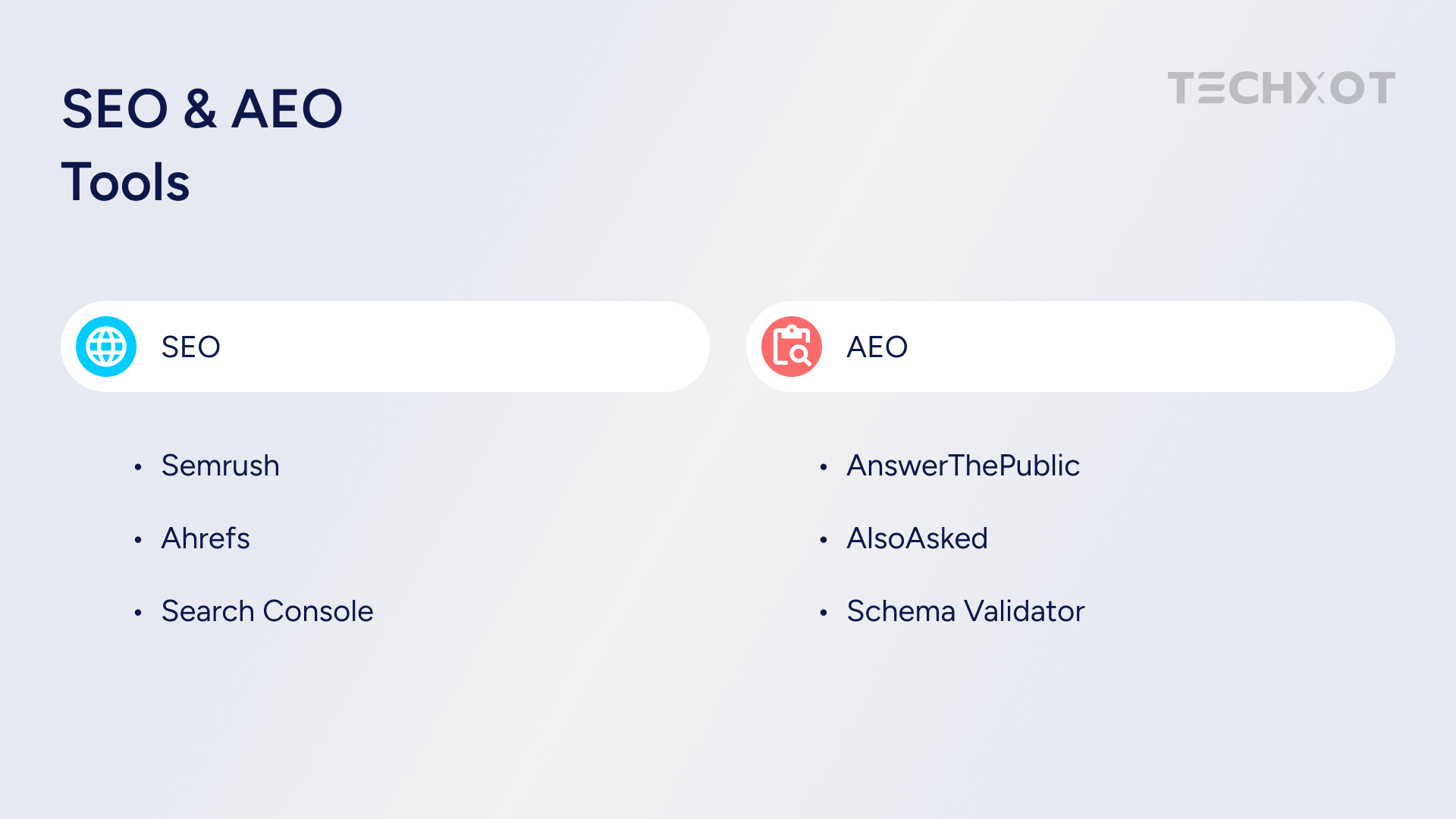
Recommended Tools for SEO and AEO
Brands optimizing for SEO vs AEO requires the right tools
SEO tools:
Keyword research and competitor analysis: Semrush
For backlink monitoring: Arefs
Search engine for indexing and keyword insights: Google Search Console
SEO audit: Screaming Frog
Performance metrics: GTmetrix
Speed analysis: Page speed Insights
AEO tools:
Understanding conversion search pattern: OpenAI
Search console and query insights: Google Search Console
Question discovery: AnswerThePublic
Schema testing: Schema markup validator
Conversational queries: AlsoAsked
Measuring Success in an AEO Landscape
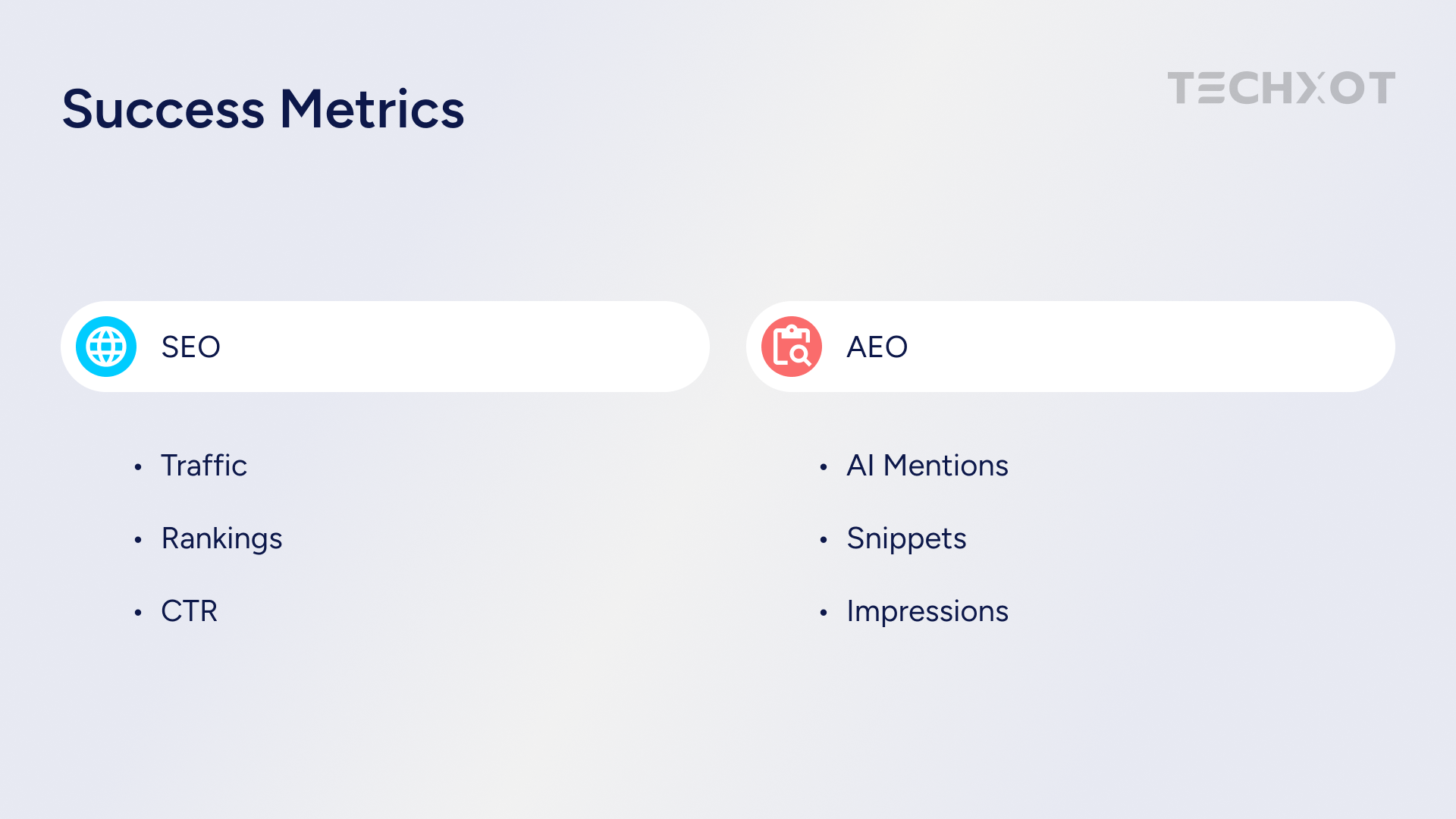
What to track in 2026
The traditional Search Engine Optimization metrics may include the following:
Organic traffic
Keyword ranking
Bounce rates
Backlink growth
While the Answer Engine Optimization include metrics like:
Featured snippet ownership
Search impressions
Brand search growth
Structured data coverage
AI answer visibility
A business must understand that SEO vs AEO is critical for future proof measurement strategies.
Conclusion
Answer engine optimization is not replacing search engine optimization; it is expanding its search capabilities to the next level.
AEO has added a new layer to search mechanism, by preparing content for AI-driven search experiences and direct answers. While AEO still stands strong for traditional rankings, website traffic and technical discovery on the web.
The real opportunity lies in understanding SEO vs AEO, that businesses now gain potential visibility across both search engines and emerging AI systems.
At Techxot, we help brands in adapting their digital presence for both search engines. We help brands discover and fill the gap between SEO and AEO with growth-focused solutions.
The future belongs to those who adapt early and optimize both search engine strategies.