
AI search vs Traditional Search: A Visual Comparison
Search has become one of the important features in the modern digital experience ecosystem. With modern AI search when users surf online they visit enterprise websites, knowledge portals, e-commerce platforms or customer support centers. Users expect fast, relevant and personalized digital experience when doing this.
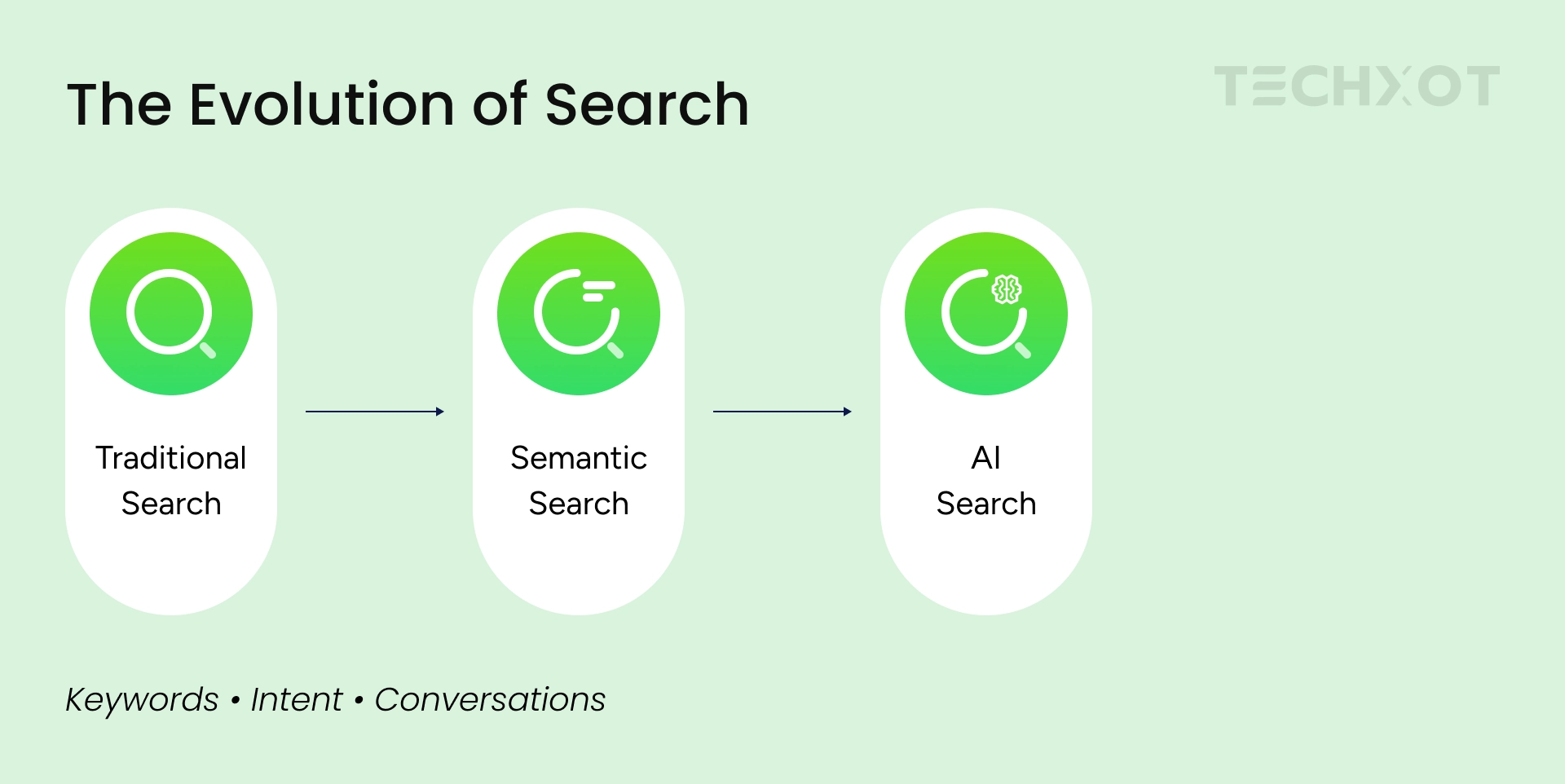
When we look into a comparison of traditional search vs AI search we understand that traditional search was never designed to match today's customer expectations. The new age AI search is changing how digital experience platforms (DXP) deliver content, personalize, improve discovery, engagement and conversions, recommend content, and drive customer journeys. The AI-powered search has shifted from keywords matching strategy to intent-driven discovery.
The shift didn't just enhance the user experiences but directly impacted the user engagement, conversion and operational efficiency of the enterprises.
Traditional Search vs AI Search
The important difference between traditional search vs AI search is how the system understands the user query.
Features | Traditional Search | AI Search |
|---|---|---|
Search Approach | Keyword-based | Intent-based |
Query Understanding | Exact Match | Natural Language Understanding |
Search Results | Static Results | Personalized Results |
Content Discovery | Manual Discovery | Predictive Discovery |
Complex Query Handling | Limited | Advanced |
User Engagement | Lower Engagement | Higher Engagement |
Optimization Strategy | Traditional SEO | AI Search Optimization or AEO |
Personalization | Minimal | Behavioral and Contextual Personalization |
Customer Journeys | Fragmented | Connected and Personalized |
Support Experience | Article-based Search | Conversational Assistance |
What Is the Main Advantage of Generative AI Search Assistant for Complex Queries?
Before AI-powered search appeared, enterprise websites completely relied on rule-based search systems. The traditional search was working well when websites had limited content and predictive user behavior. As the digital experience ecosystems evolved, search experience became fragmented.
One of the biggest advantages of generative AI search assistants is the capability to handle conversational and multi-intent queries. When we discuss traditional search vs AI search the major issue is scalability.
Common problems included:
Irrelevant search results
Difficulty finding right content
Poor product discovery
High search abandonment
Elevated dependency on support teams
Low personalization capabilities
For instance, if users search for “best DXP service providers” will only see pages containing those exact keywords rather than intent-driven recommendations.
This diverted the customer journeys. Research suggests that when a user has an intent to find some information and cannot find the information quickly they are more likely to abandon the customer journey and leave the website.
The users who actively use Sitecore search are the highest-intent visitors and they have 2-3x more ability to convert.
The traditional search systems are failing because they can't keep up with the modern customer expectations.
How AI Search Changes the Digital Experience for the Users
The AI-powered searches use technologies like:
Natural Language Processing(NLP)
Semantic search
Machine learning
Behavioral analytics
Predictive recommendations
Generative AI
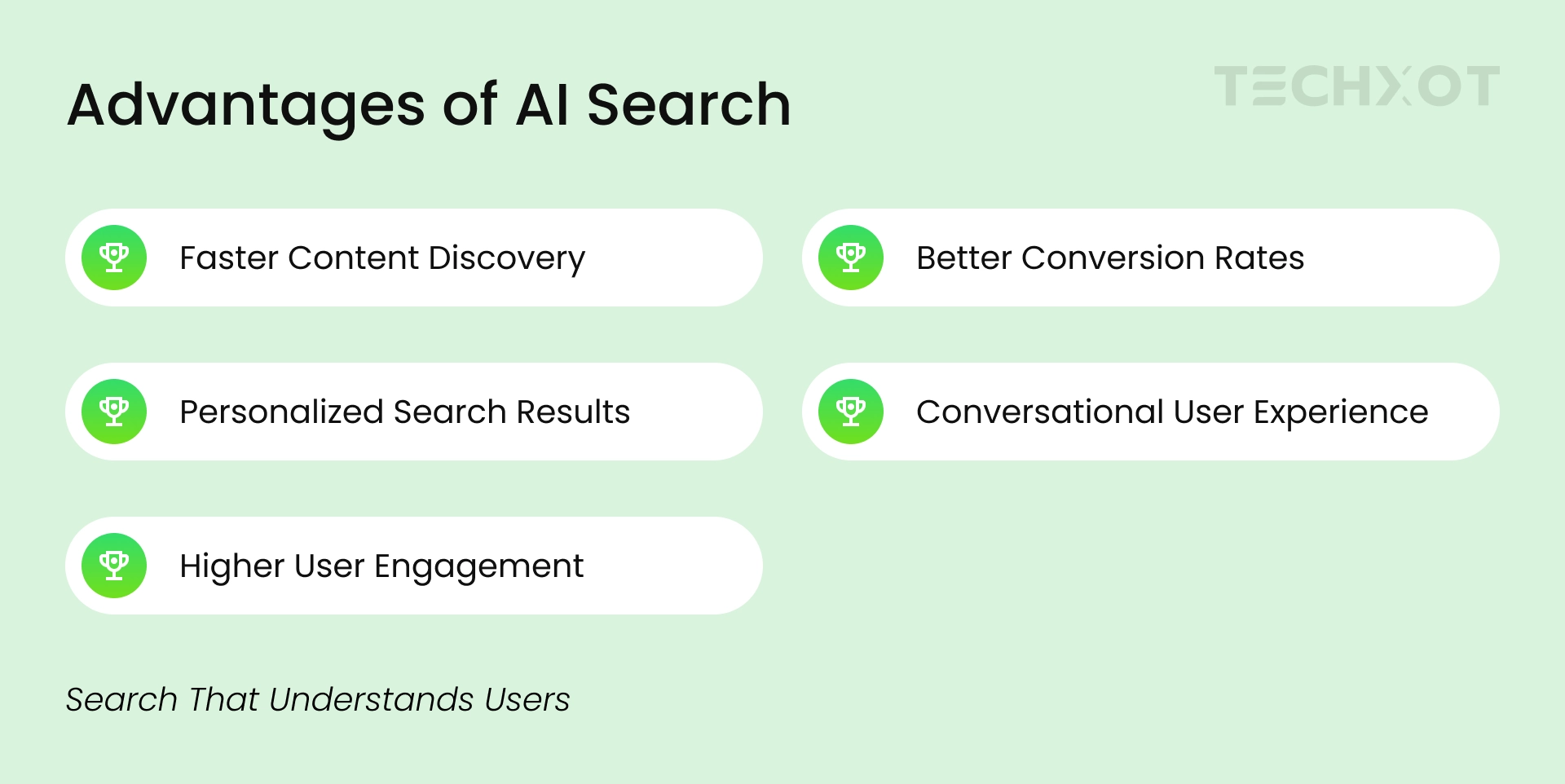
Users respond reactively to conversational and intelligent experiences. The latest research suggests AI search visitors view 3.2x more pages per session and stay 4x time longer on the websites than traditional search users.
Long page sessions Indicates stronger engagement and intent-driven content delivery.
AI Search Is Driving Better E-commerce and Content Discovery
Poor discovery is one of the most important limitations when comparing traditional search vs AI search. And users often struggle to find:
Relevant products
Helpful content
Support resources
Related recommendations
On the contrary, AI search helps improve content discovery through personalization and intent-driven contextual understanding. AI driven shoppers convert 50% higher than traditional organic searches, also these visitors show 12% higher average order value.
AI systems guide users in discovery more intelligently and don't force users to refine searches every now and then.
AI Search Is Reshaping Enterprise DXPs
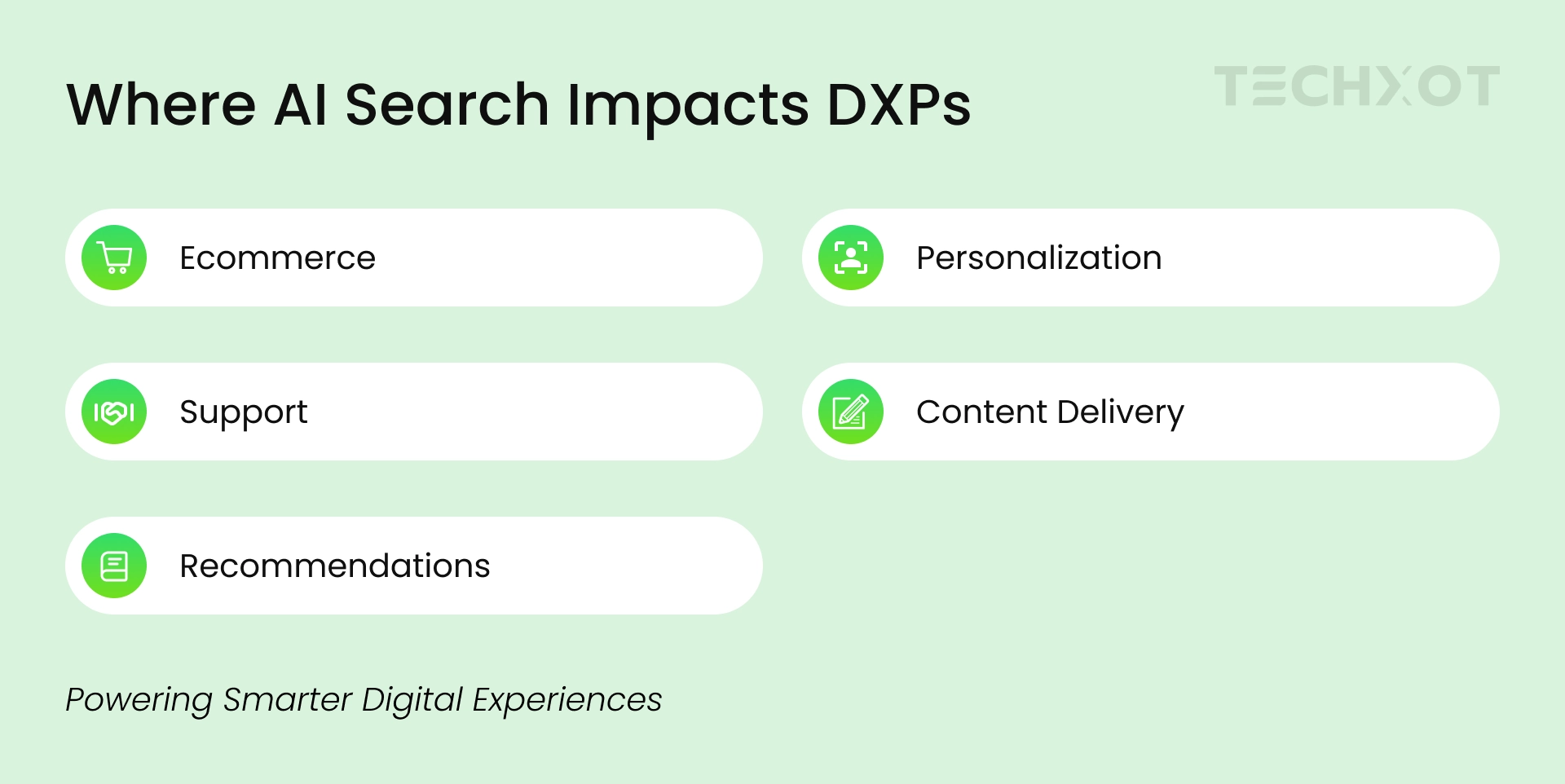
The modern digital experience platforms are evolving far from the traditional CMS. And platforms like Sitecore, Adobe, and Optimizely are AI-powered personalization and semantic search integrated into their ecosystems. The shift from traditional SEO to AEO like strategies when discussing traditional search vs AI search changed the search landscape. These capabilities matter because searches are now influenced by:
Customer journeys
Lead generation
Product discovery
Self-service support
Content engagement
Omnichannel experience
Enterprises that optimize for AI-driven discovery see 200 % more appointments generated, 2.7x more form submissions and 2.5x more call to action engagement with better visibility and discoverability. AI search is not just a usability feature anymore, but a measurable revenue and engagement driver for enterprise businesses.
AI Search Is Changing User Behavior
As the digital experience ecosystem evolves with AI, customer behavior has also rapidly changed. The users now expect conversational experiences and not the traditional navigation structures. 58% of the new age customer, uses AI everyday for browsing and purchasing journeys. As AI generated search experiences signal major shift, by relevant content appearing in 51.5% discovery experiences online.
Is Content Optimization for AI search Different From Traditional SEO?
AI search optimization is surely different from the traditional SEO, since traditional SEO focuses precisely on:
Exact keywords
Metadata
Backlinks
Ranking positions
Search engine crawlers
On the other hand, AI search optimizes:
Relevant intent
Conversational content
Contextual understanding
Question-based content
Trust and authority signals
The businesses who optimize for AI-search can have 300% more human traffic from AI visibility improvements. AI search SEO strategies don't just rank pages anymore they rank the most useful and right answers. This shift towards Answer Engine Optimization (AEO) and AI visibility together helps enterprise brands to increase AI-generated referral traffic.
The Future of Search in DXPs
The present and future of search has extended beyond search bars now. So the next generation AI-powered DXPs now include:
Conversational AI assistants
Voice-enabled search
Generative AI recommendations
AI copilots
Predictive experiences
Real-time personalization
Organizations that modernize their search capabilities early will be better positioned for the competitive advantage over improved engagement, reduce friction, and deliver more personalized digital experiences. Since search is evolving as an intelligent layer in digital experience customer journeys that create relevant comparison guides and context aware content so users respond positively.
Conclusion
The debate around traditional search vs AI search is no longer only about technology, rather about delivering better digital experiences.
Traditional search always helped users locate information and AI search helped locate right and intended information. Starting from high conversion and better engagement to conversational discovery and personalized experiences, AI powered search has now become the most important capability in digital experience ecosystems.