
Introduction
The digital experience ecosystem doesn’t compete on products alone. Because users now demand relevance and personalization experiences in their journeys. Optimizely has powerful personalization capabilities that tailor to deliver digital experiences to users that help businesses grow engagement, scale business, increase customer satisfaction and last but not the least increase conversion rates for businesses.
Let’s explore in detail what are the benefits of using a unified platform for experimentation and Personalization?
And how Optimizely helps businesses achieve greater success in personalization, which can impact conversion rates for them.
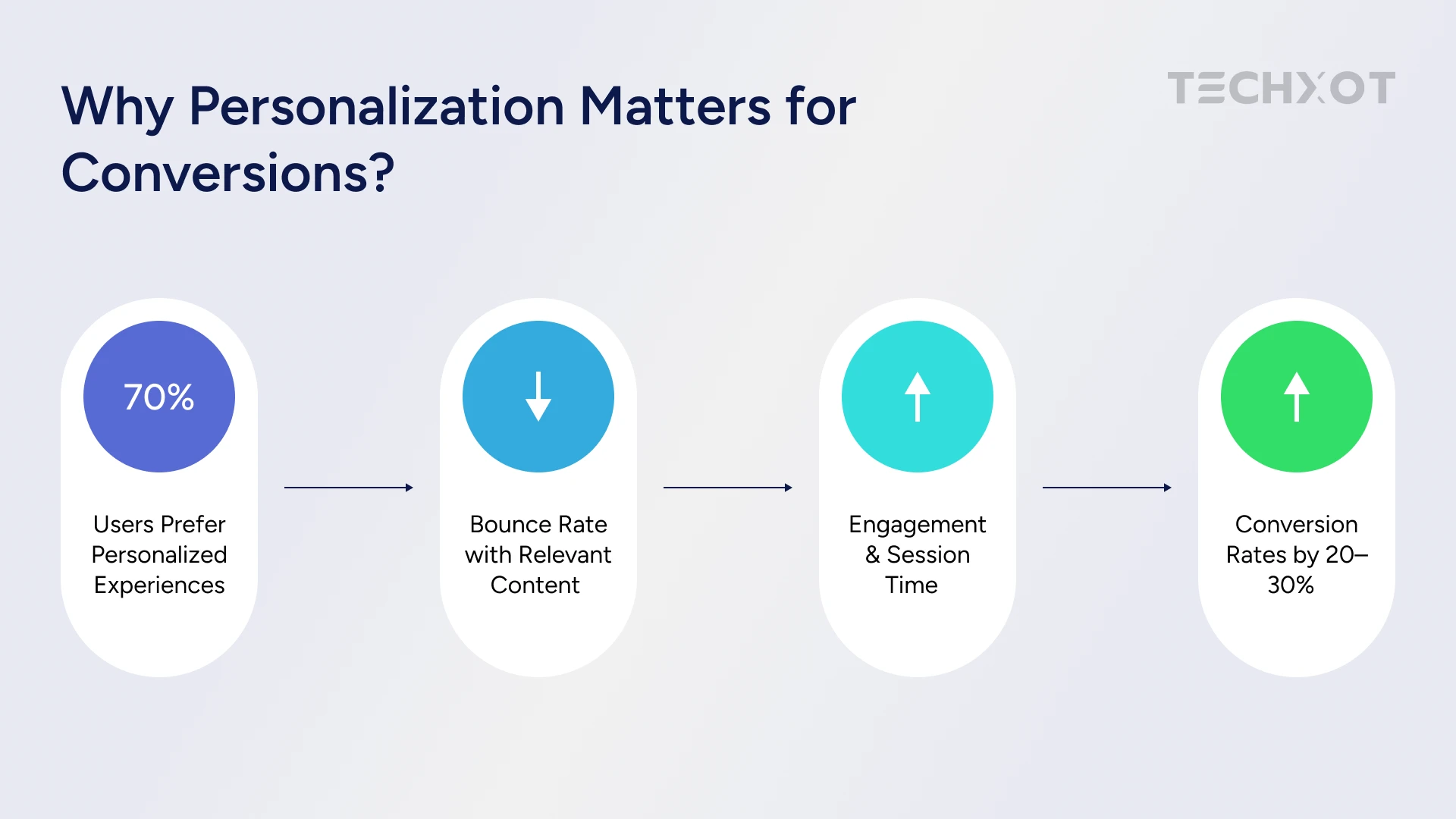
Why Does Personalization Matter for Conversion?
The new age digital experience users expect that brands understand their needs instantly and curate the most relevant experiences for them. Generalized experiences lead to disengagement while highly personalized interactions increase chances of actions like:
Sign-ups
Make purchases
Engage with content
It is proven that Personalized experiences improve conversion by 15-25%. When a customer gets a personalized journey experience, they return frequently because the content feels relevant. This results in reduced bounce rates instantly in real-time.
This is the more important capability of Optimizely personalization; designed to deliver digital experiences that are context aware and data driven.
What is Optimizely Personalization?
Optimizely personalization means a digital experience platform with capability which dynamically tailors digital experiences depending on user behavior, their demographics, intent, and context of the user’s actions.
Not every content piece is for all customers, every customer has their own likes and dislikes, so when same content is delivered to all customers, brands lose engagement and users drop out of the customer journeys.
So, Optimizely personalization features allows enterprise brands to:
Displaying different homepages banners to its target audience.
Recommend products based on browsing journeys.
Enable webpage with personalized CTAs based on user journeys.
Why does this matter? Because this DXP personalization capability ensures that every customer interaction at every stage of customer journey feels relevant.
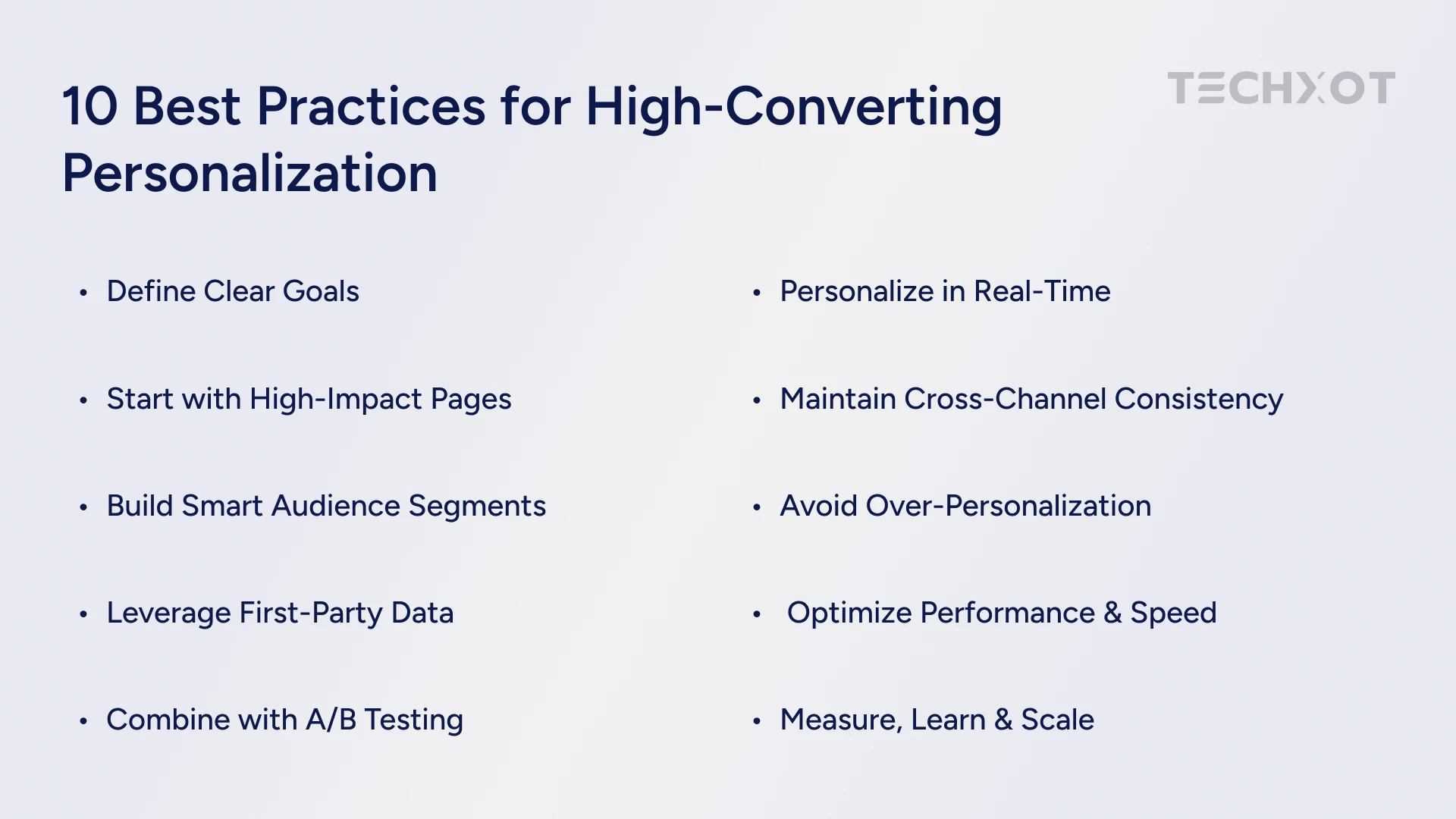
Key Optimizely Personalization Features:
Let’s explore important Optimizely personalization features to deeply understand how they help improve personalization conversion rates.
1. Audience Segmentation:
Optimizely enables marketing teams to create audience segments that are specifically based on:
User behavior like page visited, clicks, etc
User location and device
Source of referral like ads, organic, etc
Customer journey stage
When a hyper personalization audience segment is created, every segment is targeted with a personalized message that is curated for that specific segment which in return reduces brand friction and disengagement.
2. Real-time Personalization:
Optimizely personalization feature that instantly adapts content in real-time based on user interactions like:
When a user returns, he sees different homepages banners than the new visitor
Users receive cart abandoned discounts and reminders to provoke a purchase.
Real-time personalization capabilities in Optimizely ensure customers don’t drop of mid journey due to irrelevant content recommendations and is one of the best practices for creating personalized customer journeys with a digital experience platform.
3. A/B testing:
As a marketer, have you ever wondered what are the best tools for website personalization and A/B testing? Optimizely uniquely combines experimentation and personalization, so teams can test many variants and deliver the best performance experience automatically.
A/B test for banners, headlines, layouts and CTAs
Identify experiments relevant to each segment
Enhance and scale winning experiences in real-time
Using this feature, decisions are made based on analytical insights and not human assumptions.
4. AI Recommendations:
Teams that use Optimizely can easily leverage artificial intelligence to analyze insights like user behavior and predict customer preferences like:
Recommend products
Content suggestions
Prompts next-best-actions
Personalization guides every customer interaction on their journey towards relevant messaging to improve conversion rates.
5. Omnichannel Personalization:
Optimizely Personalization allows marketers to deliver consistent experiences across multiple channels like:
Website
Mobile apps
Emails
Digital ads
When the user gets a consistent experience across all channels, it builds trust and improves conversion rates at the end of the customer’s journeys.
6. Behavioral Targeting:
Behavioral targeting is tracking users in their journeys based on their interactions and intent and adapt experiences according to it. Like:
Display premium products to high value customers
Display discounted products to price- sensitive users
This simple targeting aligns experience delivery and user interactions to increase engagement and conversion rates.
How Do I Integrate a Personalization Platform with My Existing CMS?
The integration of personalization with your existing CMS enables marketeers to deliver content without disturbing your initial workflows. Platforms like Optimizely may have multiple flexible integration options like:
1. API and SDK
Connect your CMS to your personalization ecosystem using API or SDK to enable real-time data exchange and content delivery.
2. Headless CMS Approach
When teams use headless CMS to deliver content using APIs, it gives a seamless integration of Personalization engines and your CMS to deliver digital experiences across channels.
3. Native Integrations
The new age personalization platforms now come with integrated connectors to popular CMS platforms which reduce development efforts and seamless implementation.
How Optimizely Personalization Improves Conversion Rates?
1. Reduce decision delays
Optimizely helps simplify customer journeys by tailoring personalized content for users according to their needs, so they don’t have to browse too many options this removes friction from relevant recommendations.
2. Improves user experience
Personalized experiences are intuitive, as users are recommended for the right content at the right time, which creates more engaging journeys. Customers tend to spend more than their journeys interacting with content and results in low bounce rates and high conversion rates.
3. Builds trust
When users see personalized content, they trust brands more because they think brands understand their preferences. Because of this customer are likely to return more, have long-term conversions.
4. Optimize touch points
Personalization ensures that every user interaction from landing pages to checkout is in alignment to user expectations when the journey becomes conversion focused. This prompts the users to reduce bounce rates and instead complete actions like sign-ups and purchases.
5. Continuous optimization
Continuous testing and analysis enable DXPs to instantly deliver personalized experience using real-time behavioral data. These continuous improvements result in sustained growth in conversion rates.
Common Challenges in Optimizely Personalization
1. Data Fragmentation and Silos
Customer data come from multiple sources; this often leads to inconsistent or ineffective personalization due to lack of unified view of the customer. Data Fragmentation results in a reduced impact of Personalization which decreases the conversion rates.
2. Content Demand
Every user has different content requirements, so personalization needs to create multiple content variations for multiple audience segments. This increases workload on teams without supportive structured approaches; low quality content and inconsistent content are delivered.
3. Implementation complexity
Implementing personalization strategies can drive complexities and require multiple teams to collaborate over time. This slows down execution pace for all teams since they continuously juggle back and forth through this process. Personalization is quite a challenge for enterprise brands that are very new to Personalization.
4. Inaccuracy in Measuring ROI
Justifying enterprise investments in personalization in terms of conversion rates based on Personalization efforts alone is a challenge. It requires a lot of testing, experimentation, and tracking that can help attribute measurable ROI.
5. Risk of Over- Personalization
Personalization, which is based on limited data, can be inaccurate, which can surely impact user trust and lead to disengagement and lower the conversion rate.
Future Of Personalization with Optimizely
As the digital experience industry evolves, artificial intelligence and machine learning are also evolving. With this evolution the Optimizely personalization features are becoming more advanced.
The future trends may include:
Predictive personalization
Hyper-personalization journeys
Voice and conversational experiences
It is important that enterprise brands understand; personalization in today’s world is not just a DXP capability, rather it’s a full-fledged advantage, which will get you that significant competitive edge.
Conclusion
Personalization is no longer a feature; it is a strategy that helps brands become a success. Personalization in general hands down one of the best capabilities a DXP can provide. Brands that leverage personalization capabilities deliver relevant, AI recommended, data driven experiences that improve conversion rates in real-time which:
Improve engagement
Increase customer satisfaction
Drive measurable conversions
Optimizely helps brands deliver personalization not just to meet customer expectations but to exceed them.
At Techxot, we help enterprise brands to unlock full power to turn personalization into a scalable conversion engine for your brand.
With Techxot make personalization your strong competitive advantage today!